

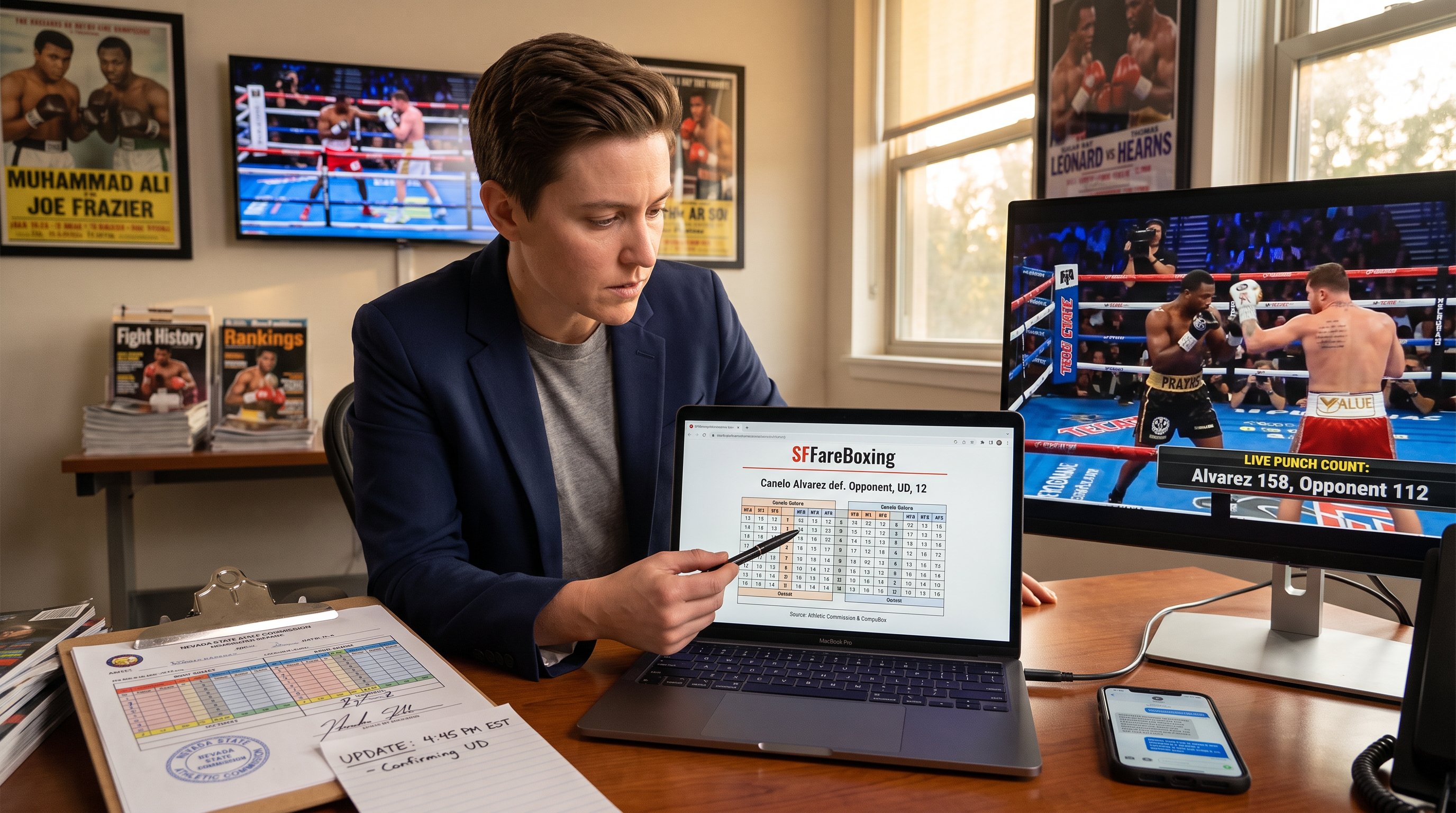
Readers weighing the site’s usefulness can start with the SFFareBoxing review of topic range and usability. This article focuses more narrowly on who supplies the scores, how reporters verify them, and what appears when an SFFareBoxing-branded scorecard is shown.


Key Takeaways
- SFFareBoxing publishes scores by aggregating official results and statistics from external sources like promoters, athletic commissions, and broadcasters rather than using its own scoring system.
- Scores on SFFareBoxing include fight outcomes, punch stats when available, and fighter rankings verified through recognized boxing registries and databases.
- Editorial verification involves confirming results through multiple independent sources before publishing, ensuring accuracy and reducing premature reporting.
- Live punch counts and round-by-round data often come from broadcast partners such as CompuBox, enriching the reader’s understanding of in-ring performance.
- SFFareBoxing’s transparent sourcing includes clear attributions to promoters, commissions, and broadcast providers, increasing trust and traceability for readers.
Who Publishes Scores On SFFareBoxing And What Readers See
Fact first: SFFareBoxing does not currently operate a self-sustained scoring system: the scores presented under its label come from external records and broadcast statistics. Readers who encounter an SFFareBoxing scorecard typically see three concrete items: the official fight result (winner, method, rounds), punch or performance stats when available, and rankings or ratings tied back to established registries.
What readers see in practice: a concise result line, for example, “Canelo Alvarez def. Opponent, UD, 12”, followed by a short boxscore. The result line is pulled from athletic commission reports or promoter confirmations: punch counts or round-by-round tallies are added when broadcasters supply CompuBox or similar data. When an SFFareBoxing page lists rankings or historical records, those often trace to databases that maintain fighter histories.
Concrete example: a SportsFanfare page summarizing a match will display verified outcomes and sometimes embed a broader event recap. That format appears on event recap pages like the site’s own coverage of knockouts and champions, which pair narrative with confirmed results and stats. Readers should treat any SFFareBoxing-labeled fixtures as an aggregator view that synthesizes external inputs rather than an original judging sheet produced by SFFareBoxing itself.
Editorial note: when a score appears under the SFFareBoxing name, the visible attribution usually includes a source line or in‑text reference to a promoter, commission, or broadcast partner. This transparency helps readers trace where a particular score or punch stat originated.
Data Sources And Partnerships Behind SFFareBoxing Scores
Fact first: SFFareBoxing relies on a mix of promoter releases, athletic commission records, recognized boxing registries, and broadcast statistics to populate its scores. These external sources supply the primary evidence that SFFareBoxing curates.
Promoter and commission channels: promoters publish bout outcomes and official statements: athletic commissions publish official decisions and bout sheets. SFFareBoxing-style coverage cross-checks both channels to confirm the winner, method (KO, TKO, UD, SD), and official time. For quick event references and results, SportsFanfare‘s event pages demonstrate how fixtures and results are presented after promoter confirmation.
Boxing databases and registries: sites that maintain fighter records (fight history, rankings, and license status) serve as primary references for career numbers and standings. Reporters use these registries to reconcile a fighter’s record after a bout, especially when a record changes due to disqualification or overturned decisions.
Broadcast partners and stats providers: live punch data and round-by-round breakdowns often come from broadcasters or third‑party services such as CompuBox. When broadcasters supply real-time stats, SFFareBoxing-style pages integrate them to give readers a fuller picture of in‑ring performance. For historical context on how scorecards appear in reporting, a verified scorecard article used by major outlets illustrates how official numbers are compiled during events.ESPN example
Site-level aggregation: SportsFanfare‘s fixtures and schedules pages demonstrate the aggregator model. They pull confirmed items from promoters and calendars, presenting a single schedule or result list that aggregates multiple primary sources. That model reduces conflicting information for readers but depends on those partners for initial accuracy.
Why partnerships matter: relying on recognized partners gives readers confidence. A promoter’s press release plus an athletic commission bout sheet creates two independent confirmations. Broadcast stats add a third layer when available, producing a triangulated, reliable scoreline for the public record.
Editorial Process: How Scores Are Verified, Updated, And Displayed
Fact first: SFFareBoxing-style content follows a verification workflow that prioritizes official confirmation, then corroboration, then publication. That sequence explains why some fixtures appear labeled “tentative” until a final signal arrives.
Verification steps: reporters first look for an official promoter announcement or commission result. If neither exists, they examine fighter social posts, venue listings, or ticketing pages for evidence. Next, they cross-reference an authoritative registry to ensure bout history and records align. Finally, if live broadcast data is available, it provides a round-by-round supplement. SportsFanfare‘s fixtures guide explains how to find and sync schedules from multiple feeds, reflecting these practical cross-checks.
Updating cadence: boxing is fluid, contracts shift, injuries occur, and commissions sometimes change decisions. The editorial team tracks three change categories: schedule alterations (time, venue, opponent), bout status (postponed, canceled), and decision updates (appeals, overturned rulings). Each change triggers an update to the published page with a timestamp and a short note describing the source of the change (e.g., promoter statement, commission ruling). Independent checks for changing SFFareBoxing results should still use the relevant commission record, promoter statement, or reputable database rather than assume that an update guarantees accuracy.
Display conventions: confirmed fixtures and results are labeled clearly: tentative or rumored bouts receive an explicit “tentative” or “reported” tag until verification. When punch stats appear, the article names the originating service (for example, a broadcaster’s live stats provider). When rankings or ratings are included, the page cites the database or sanctioning body that issued them. Example pages on SportsFanfare show this display logic by combining narrative, a confirmed result block, and source attributions.
Practical warning: readers should be cautious with early reports. A social‑media post from a fighter or promoter can indicate a result, but without an official commission or promoter confirmation, a published outcome remains provisional. The editorial policy used by SFFareBoxing-style aggregators reduces premature publishing by requiring at least one primary confirmation before marking a result final.
Conclusion
SportsFanFare’s guide to boxing coverage across the site brings together results, scorecards, records, scoring explainers, and source questions. Here, the narrower point is that SFFareBoxing-branded score content functions as an aggregator that compiles material from promoters, athletic commissions, broadcasters, and registries. Readers get a single curated view, but the underlying numbers generally originate from primary sources rather than from a SFFareBoxing judging pool.