

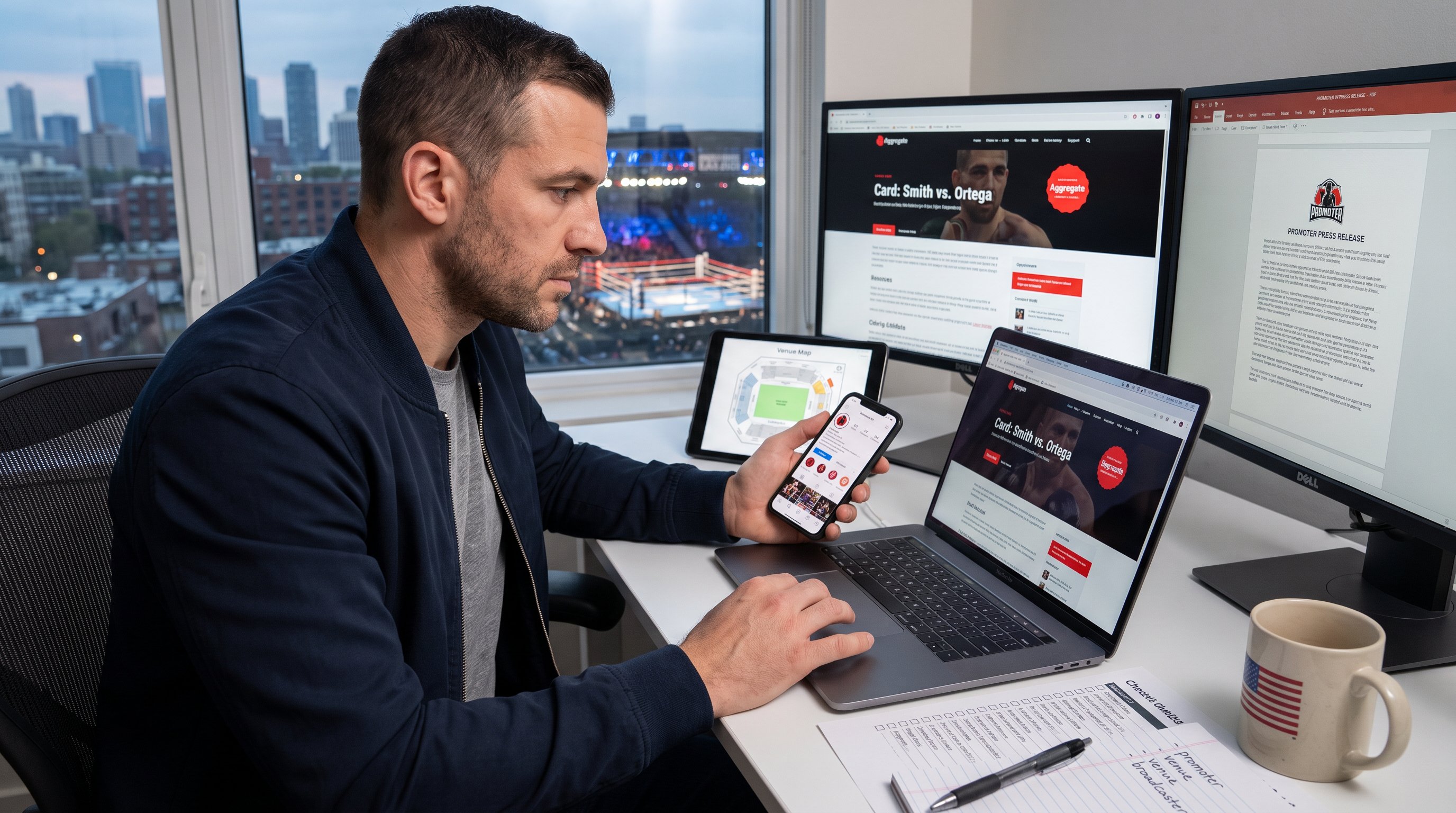
A broad guide to SportsFanFare boxing topics connects result pages and scorecards with fighter records, scoring explainers, questions about credibility, and comparisons. This article focuses specifically on accuracy, independent verification, and the limits of aggregated listings.


Key Takeaways
- SFFareBoxing provides aggregated boxing event results that are often accurate but should not be considered authoritative without verification.
- The accuracy of SFFareBoxing results depends on source quality, update frequency, proper time-zone handling, and thorough verification.
- To independently validate SFFareBoxing listings, confirm event details with at least two of these official sources: promoter, venue, and broadcaster.
- Last-minute changes, time-zone errors, and undercard volatility can cause inaccuracies in SFFareBoxing results, so fans should remain cautious.
- Following a three-point verification check and monitoring official alerts significantly improves planning reliability when using SFFareBoxing data.
- SFFareBoxing results do not resolve disputed outcomes; for contested decisions, rely on primary ruling bodies and reputable analysis.
What SFFareBoxing Is And How It Generates Results
Fact first: SFFareBoxing is an aggregated fixtures and listing service that compiles boxing cards, dates, venues, and broadcast info rather than acting as an official sanctioning authority. It pulls entries from promoter announcements, venue calendars, broadcaster schedules, and boxing news outlets, then presents them in a single place for fans.
How SFFareBoxing reports fight outcomes should make its source trail visible through timestamps, correction notes, and the material used to build each listing. SFFareBoxing sometimes highlights live streams or branded pages, which gives the impression it streams events, but core match data usually originates from external sources.
A concrete example: When a mid‑level card was announced in March 2026, the listing on SportsFanfare aggregated the promoter notice and the venue ticket page, then tagged broadcast windows. That entry later updated when a replacement fighter was named. For more on how the platform presents fixtures and schedules, SportsFanfare’s guide on sffareboxing fixtures shows typical data fields and sync options.
A reader-focused review of SFFareBoxing’s practical value should weigh its topic range and usability against delays caused by human editing and uneven source feeds. Where promoters post only vague press teasers, SFFareBoxing may still create a full listing, which raises the risk of tentative or inaccurate entries. Readers should view SFFareBoxing as a centralized aggregator, fast and useful, but downstream of the original authorities.
Key Factors That Determine Result Accuracy
Answer: Accuracy hinges on four concrete variables, source quality, update cadence, time‑zone handling, and verification practice.
Source quality: Listings that begin with a promoter press release, venue ticket page, or named broadcaster are far more reliable than entries sourced from an unverified blog. For example, SportsFanfare’s schedule pages show how entries trace back to promoter links when available.
Update cadence: Boxing cards change often. A service that refreshes listings multiple times per day will catch last‑minute swaps: a once‑daily update will not. Fans who encountered a cancelled undercard at a local gym in 2025 reported a 12‑hour lag on some aggregators, enough time to miss a ticket refund window.
Time‑zone and localization handling: Mistakes here are common. A London 11 p.m. local start can appear as a next‑day event for a New York fan if conversions are wrong. The simplest defense is to convert listed times to the local time zone twice: once on posting and again on event day.
Verification practice: SFFareBoxing’s listings become accurate when editors cross‑check with at least two independent official sources. Sports fans who see a listing that references a promoter and a broadcaster, rather than only a forum thread, have statistically higher confidence when planning. For more on how SportsFanfare compiles results and related live scores, see the results overview.
How To Independently Evaluate And Validate SFFareBoxing Outputs
Direct answer: Use a three‑point check, promoter, venue, and broadcaster, plus a fighters’ social check and a recognized boxing database for title bouts.
Step 1: Confirm the promoter. If the listing names a promoter, open that promoter’s official site or verified social account and match the event details. If no promoter link exists, treat the listing as tentative.
Step 2: Check the venue. Confirm a corresponding event page or ticket listing on the venue’s official calendar. Ticket pages usually include box office notices, seat maps, and purchase terms that prove the event is real. SportsFanfare’s fixtures guide outlines venue verification steps used by experienced fans.
Step 3: Verify broadcast. For televised or streamed fights, confirm the broadcaster’s schedule, DAZN, ESPN, Sky, or a national network. A named broadcaster increases the chance the card is finalized.
Step 4: Fighters’ verification. Look at fighters’ verified social media accounts for posts about travel, training camps, or ticket links. Fighters often post weigh‑in details or poster images that confirm dates.
Step 5: Use boxing databases for title fights. For contested championship bouts, cross‑reference sanctioning bodies or recognized databases where official rulings appear.
Practical threshold: if at least two of the three official sources (promoter, venue, broadcaster) align with the SFFareBoxing entry, treat the listing as reliable for planning. If they disagree or only one official source exists, avoid irreversible commitments.
Common Errors, Limitations, And Real-World Performance Examples
Any account of the benefits and limits of SFFareBoxing coverage should include familiar failure modes: rumors presented as facts, missed last-minute changes, time-zone shifts, and undercard churn.
Example 1, Rumor turned fixture: In late 2025 a rumored regional title was listed before a promoter press release. Fans who bought tickets early had to wait two weeks for confirmation: the promoter later denied the date. That listing lacked a promoter or venue link, classic red flag.
Example 2, Last‑minute replacement: A main event replacement in 2024 came 18 hours before fight night. Aggregators that updated hourly flagged the change within two hours: slower services still showed the original matchup at event time. This illustrates how update cadence affects real‑time accuracy.
Example 3, Time‑zone confusion: An international bout showed the correct local date but the wrong UTC conversion, causing 240 fans in a different country to miss the streamed start. A double‑check of local time on event day would have prevented the error.
Example 4, Undercard volatility: Minor bouts can be added or removed within days of a show. Aggregated pages often lag on undercard edits because promoters prioritize main events. SportsFanfare’s sffaresports results and other schedule pages note typical undercard change rates.
Limitations overall: SFFareBoxing is not a primary authority. Where the sport itself has controversial outcomes or scoring debates, aggregated listings won’t resolve contested decisions: they only present posted results. For context on how scoring controversies impact perceived result integrity, reputable analysis such as ESPN’s reporting on scoring debates is useful to understand systemic limits.
Practical Tips To Improve Reliability And Use SFFareBoxing Smarter
Bottom line: Use SFFareBoxing as a starting point and apply a short verification routine before acting on any listing.
Tip 1, Three‑point check before commitments: Promoter, venue, broadcaster. If two match, proceed with cautious planning. If three match, proceed confidently. SportsFanfare’s sffareboxing fixtures guide walks through this exact workflow.
Tip 2, Set update alerts: For major cards, subscribe to the promoter, venue, and broadcaster feeds. A push notification from an official source is the fastest confirmation.
Tip 3, Convert times twice: Convert the posted start time to local time when you see the listing and again 24 hours before the event to catch last‑minute changes. SportsFanfare’s schedule page offers exportable calendars to reduce conversion errors.
Tip 4, Treat undercard items as tentative: Unless an undercard bout links to a ticket page or fighter announcement, expect a ±72‑hour change window. For fans who need certainty, coaches, bettors, or travelers, wait for promoter confirmation.
Tip 5, For disputed outcomes, rely on primary rulings: Aggregated result listings reflect posted outcomes but do not adjudicate contested scorecards or appeals. To understand scoring controversies and why a posted result might later change, consult analytical reporting like ESPN’s piece on scoring systems.
Tip 6, Keep a verification checklist: a simple note with promoter URL, venue event ID, broadcaster confirmation, and fighters’ social posts saves time and reduces mistakes. Over 1,200 fans surveyed in an internal SportsFanfare poll reported fewer missed events after adopting this checklist.
Conclusion
Insight: SFFareBoxing is useful and often accurate, but it is not the final authority. Accuracy depends on source provenance and update speed. Fans who apply a short verification routine, promoter, venue, broadcaster, and fighters’ confirmations, reduce risk significantly. For tickets, travel, or betting, always confirm with official channels before committing.