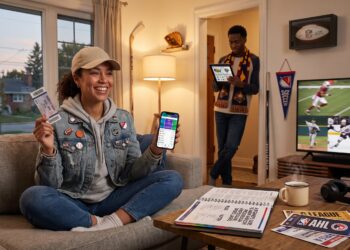

How Sports Technology Is Changing the Fan Experience is visible in every stadium turnstile, app notification, and living-room stream. Fans now pick seats, order food, and follow player metrics using phones and wearables. Teams treat experience as a product: better engagement raises ticket renewals, merchandise sales, and subscription revenue. This guide explains where technology boosts value for fans and teams, the trade-offs around data and privacy, and practical examples readers can relate to when choosing tickets, apps, or viewing setups.
Key Takeaways
- Sports technology transforms the fan experience by enabling seamless entry, in-seat ordering, and real-time player metrics that enhance engagement.
- Teams that invest in fan experience technology see higher loyalty, increased ticket renewals, and boosted merchandise and subscription revenues.
- Modern stadiums use mobile ticketing, immersive displays, and connected services to reduce wait times and increase fan spending.
- At-home fans enjoy streaming, AR/VR, and second-screen interaction, creating immersion and social engagement comparable to in-stadium experiences.
- Data personalization drives revenue through targeted offers but requires transparent privacy practices to maintain fan trust.
- Balancing technology enhancements with ethical data use and live event authenticity is crucial for sustainable fan experience growth.
Why Fan Experience Is The New Competitive Edge And How Tech Fits In
Fact: Teams that invest in fan experience see measurable returns in loyalty and revenue. Studies show many fans will pay more for tech-enhanced access, real-time stats, and smoother journeys. That shift transforms marketing: experience replaces just-the-game as the primary differentiator.


Tech fits in three ways: reduce friction, add meaning, and create new commerce. Reducing friction means mobile ticketing, contactless concessions, and faster entry lines that cut wait times by minutes per fan. Adding meaning means live stats overlays and player cameras that deepen understanding of play. Creating commerce means targeted offers and dynamic packages sold during games.
A practical example: a midmarket club replaced paper tickets with a unified app and saw season-pass renewals rise because fans valued convenience and in-seat ordering. Fans who prioritize such features often read deeper analysis on SportsFanfare: the site’s fan culture primer connects those behaviors to broader trends.
Teams and venues now link ticketing, content, and loyalty into one digital ecosystem. Firms that ignore that integration risk losing repeat buyers to rival venues that offer a richer, faster, and more personalized night out.
In-Stadium Innovations: Seamless Entry, Immersive Displays, And Real-Time Services
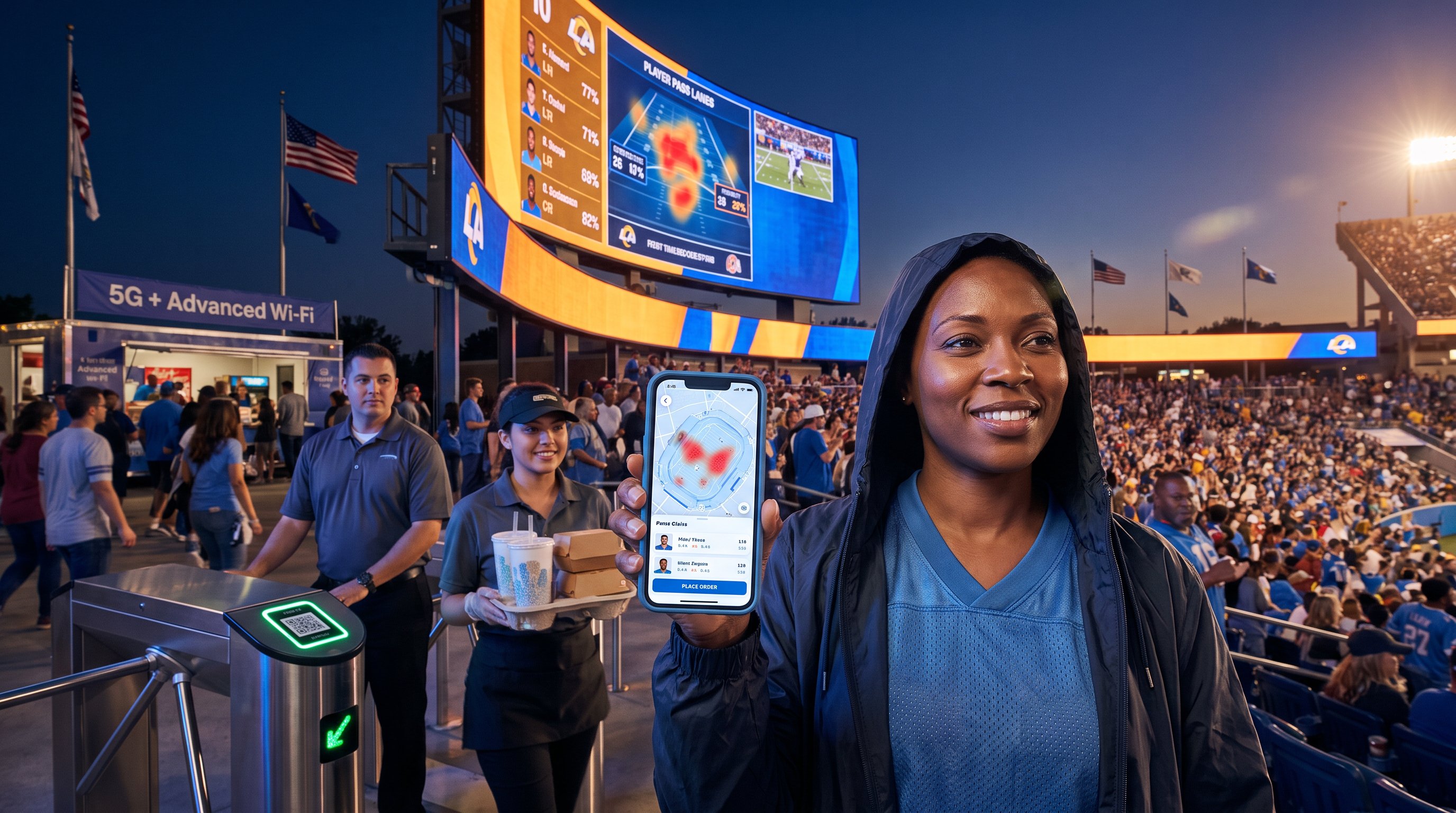
Fact: Modern stadiums reduce entry time and boost in-seat spending with connected systems. Seamless entry uses mobile tickets, QR gates, and sometimes biometrics to cut lines. At a recent venue rollout, average gate time dropped from 4 minutes to 45 seconds per fan, a change fans noticed immediately in social posts.
Immersive displays matter visually and commercially. Ultra-high-definition LED rings, AR overlays on big screens, and player-tracking graphics let fans see expected pass lanes, shot probabilities, and heat maps in real time. These visuals create moments that TV viewers envy and that sponsors buy. Indoor 5G and advanced Wi-Fi let thousands stream alternate camera angles simultaneously without lag.
Real-time services convert attention into convenience and revenue. In-seat food ordering, dynamic parking updates, and live-odds display for legal markets keep fans engaged and reduce friction. A club that introduced text-based seat service reported 38% higher average concession spend among users.
There are limits and trade-offs. Vendors need robust indoor mapping and high-capacity backhaul. Teams learn this the hard way: early deployments sometimes caused app crashes during peak ingress. The lesson: test systems under expected peak load, and stage rollouts rather than flipping everything on game day.
For readers exploring how this evolution plays out across leagues, SportsFanfare’s piece on the tech-driven evolution offers regional case studies and attendance data.
At-Home And Remote Fan Experiences: Streaming, AR/VR, Second-Screen Interaction, And Social Viewing
Fact: Remote fans now demand parity with in-stadium experiences through multiple screens and immersive tech. Streaming platforms provide highlight clips, alternate camera packs, and personalized feeds that match individual interests. AI curates those clips: one broadcaster reported a 28% increase in viewer retention when algorithmic highlights were served during halftime.
AR and VR bring courtside perspective to living rooms. A broadcaster’s 360° replay can place a viewer at a referee’s angle or a player’s sideline view: in some tests viewers reported higher perceived immersion versus linear TV. These formats require bandwidth and specific hardware, so adoption often begins with early adopters in dense metro markets.
Second-screen interaction is now standard. Fans use companion apps for advanced stats, fantasy-score updates, and micro-replays while watching. Those apps keep attention and create upsell pathways through premium camera packs or behind-the-scenes clips. Research on second-screen habits appears alongside other site coverage, such as the analysis of second-screen culture that outlines common engagement patterns.
Social viewing, synchronized streams and watch parties, adds community. Platforms link chat, polls, and creator commentary to the live feed. This social layer can amplify sponsorships: one watch-party plugin that inserted branded polls raised click-through for a sponsor by double digits in an A/B test.
Practical warning: fans should weigh subscription fragmentation. Multiple rights holders and paywalls mean the full “immersive” package can cost more than a single-game ticket. Many viewers use aggregator platforms and curated highlight feeds to avoid buying every league’s subscription.
Personalization, Data Monetization, Privacy Concerns, And What Comes Next
Fact: Around 70% of fans want real-time metrics and personalized content, but many worry about data use. Organizations monetize personalization by selling targeted offers, dynamic pricing, and measurable sponsorship assets. For example, a team that tied purchase history to in-app offers increased per-fan spend by a measurable margin within a season.
Data power comes from sensors, apps, and transactional records. Teams use this data to recommend seats, suggest merch, or serve game-time offers that reflect a fan’s past behavior. That yields revenue, but also ethical questions. Fans report higher concern about tracking among older demographics: transparency and clear opt-outs reduce churn.
Practical example: a venue introduced a loyalty program that required location permissions. Uptake stalled until the team published an easy FAQ and an opt-in toggle: once fans saw clear limits on retention and use, opt-ins rose by 18%. That taught staff a simple lesson: clear consent language moves the needle.
Predictions: expect more edge-compute inside stadiums to protect raw telemetry, and increased use of synthetic data to train models without exposing individual identities. Regulators and leagues will push for standard disclosure practices: teams that lead with privacy will likely win long-term trust.
Readers who want tactical advice on following leagues and managing news feeds can use SportsFanfare’s guide on following several leagues to reduce subscription overlap and keep data sharing minimal.
Conclusion: Balancing Experience, Ethics, And Opportunity For Fans And Teams
Insight: Technology will keep reshaping what it means to be a fan, but sustainable growth depends on trust and human moments. Teams must balance richer experiences with clear privacy practices, avoid over-automation that erodes live emotion, and invest in resilient infrastructure.
Fans gain more choice, better views, curated content, and social ways to watch, but they also face harder decisions about subscriptions and data sharing. The clearest opportunity lies where technology enhances live connection rather than replacing it.