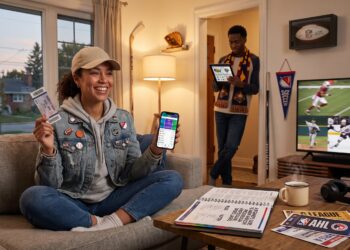


Sports fandom has transformed into a full-time digital entertainment experience by extending supporter engagement far beyond live match broadcasts into a continuous cycle of content, reaction, and community interaction. Modern supporters engage with transfer news, post-match debates, fantasy league decisions, podcast episodes, and viral clips throughout the week, creating a daily sports media rhythm that operates independently of fixture schedules.
Sports fandom now generates comparable digital activity during non-matchday periods to live event windows, driven by social media algorithms, creator content, and real-time news cycles. Nielsen’s 2025 Global Sports Report confirms that 51% of people globally identify as sports fans, reflecting an audience whose engagement patterns now resemble entertainment consumption rather than passive viewership tied to broadcast windows.


Why Do Fans Stay Engaged With Sports Even When Games Are Not Being Played?
Fans stay engaged with sports during non-matchday periods because emotional attachment to clubs, athletes, and competitions extends far beyond the 90 minutes of a live fixture. A 2022 study published in the Journal of Sport and Social Issues confirms that club affiliation strengthens peer relationships, daily routines, and community membership among active supporters across age groups. Transfer windows generate weeks of sustained speculation, with platforms (X, Reddit, and YouTube) hosting discussion threads that accumulate thousands of interactions per post during active negotiation periods. Injury updates, managerial decisions, and squad selection news arrive daily through club channels, sports news aggregators, and journalist accounts, creating a continuous information cycle that rewards regular platform checking. Research from International Business Machines (IBM) confirms that 90% of sports fans engage with content beyond the live broadcast, confirming that off-pitch content holds equivalent engagement value to live match coverage. Fan podcasts, statistical breakdowns, and historical retrospectives fill the gaps from one fixture to the next, turning sports into a continuous narrative anchored by named clubs, players, and competitions rather than isolated broadcast events.
How Have Social Media Platforms Changed the Way Fans Celebrate Sports?
Social media platforms have changed how fans celebrate sports by replacing private reactions with public, real-time expressions shared across global audiences within seconds of key moments. A goal, a red card, or a transfer announcement triggers immediate waves of posts, replies, memes, and video clips across X, Instagram, TikTok, and YouTube Shorts before broadcast pundits complete first-take analysis. Platforms reward rapid posting through algorithmic amplification, meaning the fastest reactions reach the largest audiences and create competitive dynamics around reaction speed and content spread. Fan accounts with dedicated followings build credibility through consistent reaction quality, turning celebration into a measurable digital performance tracked through impressions, shares, and comment volume. TikTok’s sports content reached over 2.7 billion views per month in 2024, confirming that short-form celebration clips now function as a primary fan expression format after live sporting moments. Celebration formats have shifted from stadium chants and private conversations toward shareable content that extends the emotional peak of a sporting result across hours of continued online engagement documented by platform analytics.
Why Do Sports Memes and Viral Reactions Spread So Quickly Online?
Sports memes and viral reactions spread quickly online because they compress complex emotional responses into instantly recognizable formats that require no prior context to understand or share. A manager’s frustrated expression, a player’s celebration gesture, or a commentator’s exclamation becomes a reusable template applied across unrelated situations, extending the original moment’s reach far beyond sports audiences into mainstream internet culture. Platforms (X and Reddit) reward high-engagement content with algorithmic promotion, pushing memes from niche football communities into mainstream feeds within hours of a notable sporting event. Sports moments carry shared emotional stakes across millions of viewers simultaneously, creating the synchronized reaction conditions that produce mass meme adoption at rates exceeding entertainment or political content. Stanford Internet Observatory research confirms that sports content generates the highest organic sharing rates across social platforms, driven by collective emotional investment rather than paid distribution. The 30-minute window following a major sporting event represents peak viral distribution time, as memes tied to live moments lose cultural relevance rapidly once the news cycle advances.
How Do Fan Communities Create Their Own Sports Culture Online?
Fan communities create their own sports culture online by developing shared language, running jokes, historical references, and internal hierarchies that exist independently of official club or league communications. Subreddits dedicated to football clubs accumulate years of thread history, community-specific terminology, and inside references that newcomers learn before participating meaningfully in active discussions. Discord servers for supporter groups host live match commentary, player ratings, transfer speculation, and post-match debriefs in real time, creating parallel broadcast experiences produced entirely by fans without broadcaster involvement. Fan accounts on X and Instagram build audiences larger than official media outlets by delivering faster reactions, sharper analysis, and community-specific humor that resonates more directly than corporate content strategies. YouTube channels producing tactical analysis, transfer commentary, and fan debate shows attract subscriber counts measured in millions, confirming that supporter-generated content competes directly with professional sports journalism for daily audience attention. Community-built culture produces terminology, celebration formats, and rivalry narratives that spread from online spaces into stadium atmospheres, reversing the traditional direction from which sports culture previously originated.
What Types of Content Keep Sports Audiences Active Between Matches?
Sports audiences remain active from one fixture to the next through a range of content formats that address different aspects of fan interest and emotional engagement. Transfer activity, injury news, and tactical previews sustain attention across the days separating live events, with platform analytics confirming that sports content consumption peaks on days adjacent to fixtures. Spotify’s 2024 Loud and Clear Report confirms that sports podcast listening grew by 32% year-on-year, reflecting the expansion of audio content as a primary off-pitch engagement format across commuting and leisure hours.
The types of content that keep sports audiences active from one match to the next are listed below.
Why Do Supporters Build Daily Online Habits Around Their Favorite Teams?
Supporters build daily online habits around their favorite teams because emotional investment in a club creates a psychological need for regular updates that functions similarly to checking personal messages or news feeds throughout the day. Club-following behavior activates identity-reinforcing routines, with supporters starting mornings by checking injury updates, training ground news, and social media posts from players and managers before completing other daily tasks. Notification systems on applications (OneFootball, FotMob, and official club apps) deliver personalized alerts that pull supporters back into team-related content multiple times daily regardless of fixture proximity. Group identity reinforces habit formation, as online communities reward consistent participation through recognition, reply engagement, and community standing that encourages daily return visits across forums and social platforms. Research from GlobalWebIndex confirms that 69% of sports fans follow at least one sports-related social media account daily, reflecting the documented presence of team content within daily digital routines. Content availability operates without pause, with transfer speculation, training updates, press conference quotes, and fan debate threads active across each day of the calendar year regardless of competitive season timing.
How Has Sports Entertainment Expanded Beyond Traditional Broadcasting?
Sports entertainment has expanded beyond traditional broadcasting through creator-led content, fan-operated livestreams, independent analysis channels, and interactive communities that collectively produce more sports content hours than any single broadcaster delivers. YouTube channels dedicated to football tactics, transfer analysis, and match retrospectives publish daily content independent of league broadcasting agreements, reaching audiences measured in millions without requiring television rights purchases. Creator platforms allow former players, coaches, and supporters to launch media operations at production costs accessible to non-institutional producers, dismantling the broadcaster monopoly over sports audience access that defined the pre-digital era. Twitch and YouTube Live host supporter watch-along streams during live fixtures, combining broadcast audio with real-time fan commentary that creates a hybrid viewing experience unavailable through official channels. Research from Deloitte’s 2024 Sports Industry Report confirms that digital creator content reaches 38% of sports audiences who consume no traditional broadcast coverage, identifying a generation of fans served entirely by non-broadcast sports media. Interactive communities on Discord, Reddit, and Telegram add participatory layers to sports consumption by making audiences active contributors to analysis, prediction, and debate rather than passive broadcast recipients.
Why Are Matchdays Only One Part of Modern Sports Engagement?
Matchdays function as peak moments within a continuous engagement cycle rather than the central unit of modern sports consumption, with pre-match and post-match content generating comparable audience activity to live broadcasts. Pre-match content begins days before kickoff through press conferences, injury updates, tactical previews, and lineup speculation that generate sustained discussion independent of the live event itself. Post-match analysis, player ratings, referee reviews, and highlight compilations extend active engagement for 24 to 48 hours after the final whistle across podcasts, social media, and sports news platforms. Transfer windows, international breaks, and pre-season tours fill the calendar gaps from one competitive fixture to the next with content cycles that maintain audience activity without live match broadcast dependency. A supporter following a Premier League club engages with club-related content across an average of 6.3 touchpoints per day according to 2024 research from Two Circles, a sports data and marketing agency based in London, confirming that matchday represents a fraction of total weekly fan engagement volume. Sports entertainment now operates on a 365-day publishing cycle that treats each calendar day as an opportunity for audience engagement regardless of fixture scheduling.
How Do Fans Move Between Different Types of Online Entertainment During Sports Events?
Fans move across multiple online entertainment categories during sports events through browsing patterns that shift from live content to discussion boards, prediction platforms, short-form video, gaming spaces, and social feeds within the same session. A supporter watching a live fixture on a streaming platform checks a live score application for statistics, opens X to follow journalist commentary, and visits a prediction thread on Reddit before halftime concludes. Discussion boards on Reddit and dedicated football forums attract peak traffic during live matches, with threads accumulating thousands of comments per fixture as fans debate decisions, share clips, and post real-time reactions. Prediction platforms and interactive quiz tools capture attention during slower match periods, offering participation formats that replace passive viewing with active engagement across the full broadcast window. Short-form video platforms (TikTok and YouTube Shorts) receive traffic spikes immediately after notable match moments as fans search for clips before official highlights reach publishing queues. Gaming spaces, including sports simulation titles and football-themed casual games, absorb attention during half-time intervals and post-match periods, extending the active entertainment session beyond the broadcast window.
What Kinds of Online Platforms Become Part of Late-Night Sports Browsing Sessions?
Late-night sports browsing sessions draw fans across a sequence of platform categories that extend from match-related content into wider entertainment spaces as sessions progress beyond initial fixture coverage. A supporter finishing a late European fixture at midnight moves through highlight compilations, post-match analysis articles, transfer speculation threads, and social media reactions before the browsing session reaches a natural conclusion. Sports news aggregators (Google News Sports, BBC Sport, and ESPN) capture early session traffic through headline-driven browsing that surfaces related stories, tactical pieces, and player profile updates connected to the completed fixture. Highlight compilation channels on YouTube sustain sessions beyond initial match recap consumption by serving algorithmically recommended videos that extend viewing time across adjacent football content categories. Prediction communities and fan debate forums on Reddit attract late-night traffic because discussion threads remain active for hours after fixtures conclude, rewarding supporters joining conversations after watching replays or reading post-match coverage. Entertainment-focused platforms and gaming sites appear within late-night browsing sessions as supporters transition from sports-specific content toward broader entertainment categories during extended digital sessions following major fixtures or active transfer windows.
Where Does Situs 888 Fit Into the Broader World of Sports-Centered Internet Browsing and Fan Curiosity?
Situs 888 fits into the broader world of sports-centered internet browsing as part of the entertainment category that sports audiences encounter during extended digital sessions connected to major fixtures, transfer windows, and late-night browsing activity. Sports audiences navigate across multiple platform types during active browsing sessions, moving from sports news and live score platforms toward entertainment and gaming spaces as sessions extend beyond match-specific content consumption. Algorithmic recommendation systems on search engines and social platforms surface entertainment destinations alongside sports content, increasing exposure to non-sports platforms during football-focused browsing activity at peak engagement periods. Research confirms that sports audiences rank among the highest-engagement digital demographics, with active browsing habits extending across news, gaming, entertainment, and community platforms during major sporting events. Fan curiosity drives discovery of platforms outside dedicated sports spaces, particularly during transfer windows, international tournaments, and late-night fixture schedules that sustain browsing activity beyond standard hours. Sports-engaged internet users exploring entertainment options beyond core sports content encounter Situs 888 as part of the wider digital environment that surrounds football-driven browsing sessions.
What Should Fans Keep in Mind While Consuming Sports Content Across Multiple Online Spaces?
Sports audiences navigating multiple platforms during live events and late-night browsing sessions face risks including misinformation exposure, digital fatigue, and reduced ability to distinguish verified sources from unverified content across fast-moving sports news cycles. Platform credibility verification, personal data awareness, and screen time monitoring protect the quality of the sports consumption experience across extended multi-platform digital sessions.
The factors fans keep in mind during multi-platform sports content consumption are listed below.