

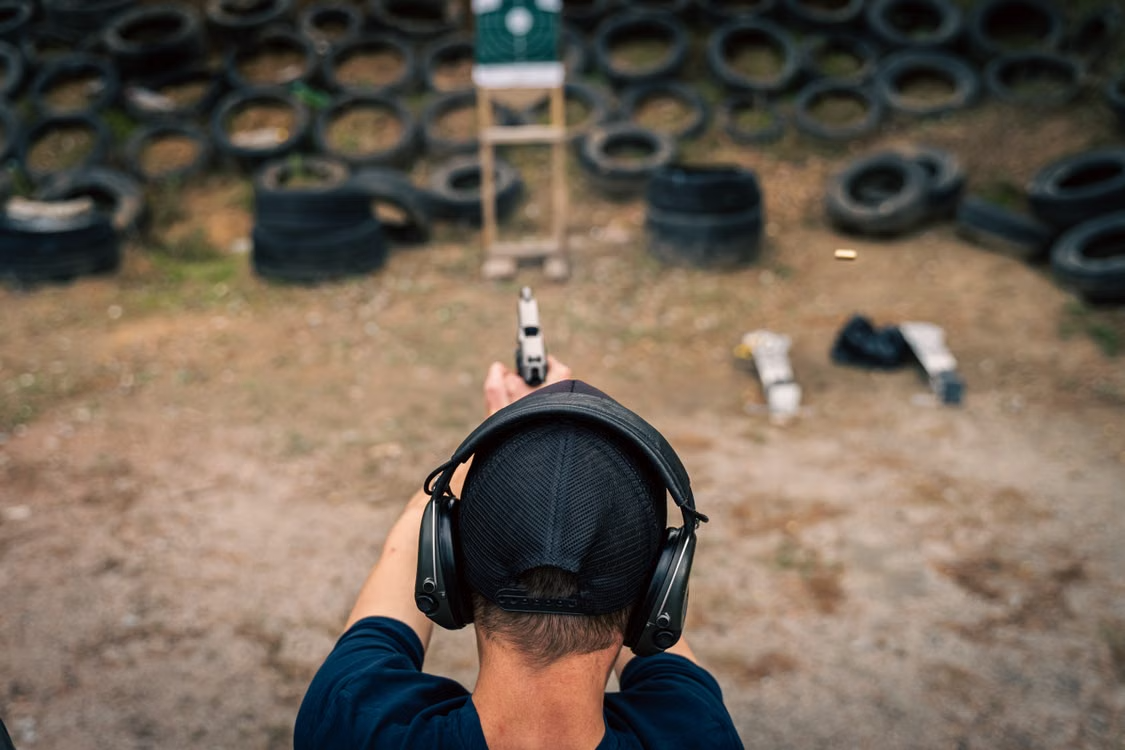
Ever thought about turning your weekend range trips into something more competitive?
You’re not alone. The shooting industry has boomed in recent years and there are more shooters than ever before crossing over from casual plinking to structured competition. The thing is…

There seems like such a big divide between playing around at the range on Saturday and being up on stage at a competition if you are standing on the beginners side of it.
The good news? It doesn’t have to be.
What’s in this guide:
Why Range Days Matter More Than You Think
Weekend range days are not “time away from the gun”. They are the foundation of every competitive shooter’s success.
According to NSSF research, there are over 52.7 million target and sport shooters nationwide. That’s a lot of folks, and many of them took their first step right where you are.
Every range trip is a chance to:
The shooters who transition to competition the easiest are the ones who approach every range day as practice not playtime.
Ammo Choices That Set You Up For Success
Ammo can be one of the most perplexing subjects for new shooters. It’s easy to either spend too much or not enough.
Here’s what you need to know:
FMJ rounds are typically used for range practice and most shooting competitions. Reliability feeding, cheaper than defensive rounds, and ideal for high volume drills.
Hollow point ammo is an entirely different animal. Hollow point ammo is made for self-defense and duty… Not punching holes in cardboard. Most competitive shooters still shoot hollow point ammo as well though, because carry guns and home defense drills require the use of actual defensive loads. Knowing the difference between hollow point ammo and range ammo makes you a smarter buyer, and a better shooter.
Buy in bulk if you shoot 9mm. Look for 9mm ammo ready for immediate shipment so you never miss a match or practice session due to an empty box of ammo. Ammo availability is much more important than cool gear when starting out.
Pro tip: Always have enough ammo for at least 3x practice ranges and a match. Running out of ammo when you’re hot is the worst.
Building The Skills That Win Matches
A lot of beginners worry about speed way too much. They try to keep up with pro speedruns on YouTube before they can reliably hit a target.
This is the biggest mistake a new shooter can make.
Competition shooting is built on fundamentals:
Dry firing at home is one of the quickest methods to improve these skills without shooting through a box of ammo. Spend 15 minutes a day and you will improve drastically. The experts dry fire. The mid-level shooters dry fire. The new guys who don’t, never will.
Once you feel comfortable with the basics move on to motion. Shooting from various positions. Reloading on a timer. Any drill you can perform at a public range gets you one step closer to competition ready.
Beginner-Friendly Competition Formats
Not all competitions are for everyone. Industry statistics estimate that competitive shooting makes up ~20% of the shooting sports market. The disciplines range from beginner to expert.
The most beginner-friendly formats are:
Steel Challenge is almost always the recommended starting point. Why? Because you shoot the same stages every time you shoot a match, so you can easily track improvement without worrying about variables. Also, hitting a steel plate just feels better than punching paper.
Ask at your local gun club website or at your regular range. Most clubs are eager to have new shooters and will gladly match up newcomers with someone experienced for their first time shooting.
Making The Leap From Range To Match Day
The first match is always anxiety-inducing. Understandable. Every shooter felt like an outsider walking into their first match ever.
Here’s how to make it easier:
Before the match:
On match day:
The first match isn’t about victory. It’s learning flow, getting used to having a timer, and walking away at the end of the day safely. Each competitor has a first match story, and nearly every first match story sounds like this:
“Just start.”
You will feel slower during your first match than you expected. You’ll forget steps. You’ll miss a couple shots. It’s ok. The month after that you’ll show up better and faster than you have before, and the month after THAT even more so. That’s what competition is for–forcing progress where casual range days won’t deliver.
Bringing It All Together
Jumping from day of fun at the range to competition isn’t jumping one giant hurdle…. It’s many small intentional steps.
To quickly recap:
Competitive shooting is one of the quickest methods to improve your firearms skills, meet like-minded shooters, and receive honest feedback. Continue to work hard, practice safety, and remember … every expert out there was once a novice with the same questions you have now.