


Watch a sprinter explode off the blocks. Watch a gymnast hold a perfect handstand. Watch a quarterback read a defense and deliver a strike. Now watch a proper car carve through a corner. The similarities jump out.
Both demand power. Both require precision. Both ask for endurance. Both need thousands of hours of work nobody ever sees. And both can leave a person breathless.

This connection is not just a nice metaphor. It runs deep into the engineering and physiology. The same fundamental rules apply.
The Power-to-Weight Equation
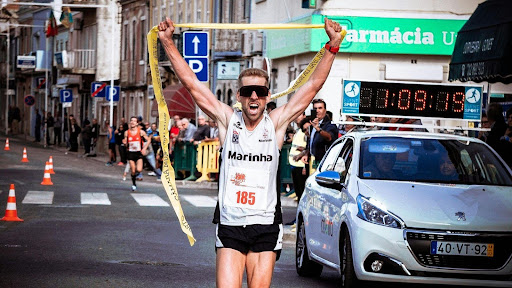
This is where it all starts. In sports, lighter and stronger wins. Gymnasts pack immense power into tiny frames. Marathon runners carry almost no excess mass. Extra weight is a penalty. Cars follow the exact same logic.
A lightweight chassis with a stout engine will always outrun a heavier one with identical horsepower. Engineers fight for every gram. Athletes fight for every pound. Both are after the same thing. Maximum output with minimum baggage. This single principle separates the good from the great.
The Endurance Trade-Off
A sprinter’s body is built differently from a marathoner’s. One unleashes everything in ten seconds. The other paces for two hours. Cars face that same fork in the road. A drag engine makes monster power for a few hundred feet. Take it on a road course and it will scatter itself across the asphalt. An endurance engine gives up peak numbers. It gains the ability to run hard for an entire day.
The engineering choices mirror the training choices. Different missions demand different builds. Nobody asks a miler to run the hundred-meter dash. Nobody expects a funny car to finish Le Mans. Consider the old Chevy 2.2 engine. It never made a headline. It never scared anyone at a stoplight. It just ran. Year after year. That was the whole point. It was the marathoner of the automotive world. Consistency was its superpower.
The Cooling Imperative
Athletes sweat. It is not optional. Muscles generate immense heat. Without evaporation, performance craters. The brain slows. The body shuts down. Cars sweat too.
Radiators, intercoolers, and oil coolers are the mechanical equivalent. They dump waste heat into the passing air. This keeps internal components happy. An overheated engine pulls timing and loses power. Then it fails. An overheated athlete pulls up and loses the race. Then they collapse. Both require sophisticated thermal management. Both fail without it.
The Feedback Loop
An athlete’s nervous system never stops working. The brain sends signals to muscles. Muscles send signals back to the brain. This loop runs thousands of times per second.
Modern cars operate the same way. Sensors monitor wheel slip, steering angle, and lateral force. The computer processes this flood of data. It sends commands to brakes, throttle, and suspension. This closed loop allows both man and machine to dance at the limit. It is the difference between a perfect save and a trip into the wall.
The Unconscious Competence
Athletes drill the same motion until it becomes automatic. A shooter takes ten thousand jump shots in an empty gym. A driver runs ten thousand laps in a simulator. The conscious mind steps back. The body just knows.
Cars develop a similar rhythm. Adaptive transmissions learn your habits. They hold gears on your favorite back road. They shift early on your Monday morning slog. The car starts to anticipate. It feels alive. It feels like a partner. This is not magic. It is machine learning applied to the daily commute.
The Human Interface
A good driver is an athlete. The body is the connection point. Core strength resists cornering loads. Fine motor control smooths out steering inputs. Endurance keeps the mind sharp for hours. Professional racers train like other professional athletes. They run. They lift. They watch their heart rates.
The vehicle amplifies their physical abilities. It translates intent into motion. This partnership is true synergy. The machine needs the human. The human needs the machine. Together they become something neither could be alone.
The Obsession With Inches
Olympians chase hundredths of a second. They tweak their start position. They adjust their nutrition. They analyze their sleep. Each gain is tiny. Add them all up and you have a gold medal.
Automotive engineers live the same life. They shave drag coefficients by a single point. They trim grams from reciprocating mass. They eke out half a percent in combustion efficiency. Alone, these gains are invisible. Stacked together, they create a legend. This relentless grind for marginal improvement is a shared religion.
The Feeling
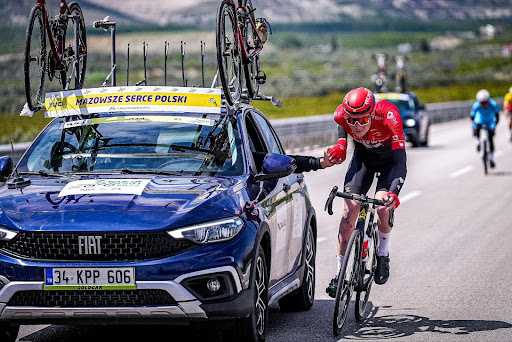
In the end, both pursuits deliver the same reward. A perfectly threaded pass. A perfectly apexed corner. The crowd roaring. The engine screaming. These moments transcend logic. They justify every early morning and every late night. They connect people to something bigger than themselves.
Whether on the field or on the track, that feeling is the real destination. It is the shared DNA neither side talks about. It is why we watch. It is why we drive. It is why we care.
Wrapping It All Up
The athlete and the engineer speak different languages. They train in different environments. They compete for different trophies. But they are solving the same puzzle. They are chasing the same ghosts.
That common pursuit is beautiful. It proves that excellence wears many faces. A perfect lap and a perfect throw come from the same place. Both deserve respect. Both deserve the relentless pursuit.