
We all love those types of players. The types of players who perhaps don’t really fit the mould of what is usually considered to be a professional footballer. Words like outlandish, unconventional and (un)necessarily extravagant come to mind when witnessing their performance. Yet their ability to resonate with fans and, more importantly, create an impact on the field is truly unbelievable. On a global stage, where the world is watching, the upcoming World Cup in 2026 presents an opportunity for players to emerge as national heroes. It’s not about the stats, or their career or their future, it’s about the present and how the performance of that particular player can capture the hearts of many.
We’ve looked at the history books, but more importantly, listened to our hearts and produced a starting eleven of ballers who would make it into the World Cup version of the ‘Streets Won’t Forget’ hall of fame.


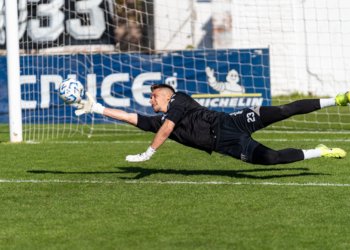
GK. Guillermo Ochoa
Mexico, 2014
Starting off with a true banger. It feels like Ochoa is a man who never ages; he has been there at every recent World Cup, and feels like he only plays professional football for Mexico. However, he made the recent decision to transfer to AEL Limassol in Cyprus to give himself one last shot at a World Cup appearance. He is 40 now, and you feel it may be the last time, if at all, we see him between the sticks for Mexico.
The keeper is perhaps known for his brick-wall performance vs Brazil in 2014, where he produced a series of impossible saves and kept a clean sheet against the likes of Neymar, Oscar and Willian – a case study in heroism. Ochoa’s performance was pure theatre, making him a beloved figure not only in his home country but across every continent on earth.‘El Tricolor’, which references Mexico’s iconic green, white and red colours, have the honour of hosting the opening WC game in Mexico City. Coming into the tournament, they have been boosted by winning the Concacaf Gold Cup and will look to go beyond the group stages of the World Cup after failing to advance in 2022 – the last time that happened was 1978. According to online social casino and several other online bookmakers, they are favorites to beat South Africa, who themselves are making an appearance in the competition for the first time since 2010.
DEF. David Luiz
Brazil, 2014
Everyone with a decent bit of footballing knowledge knows the man. Everyone who doesn’t will likely remember his incredible hairstyle. Known for more than his trips to the salon, Luiz is a cultural figure in world football. Having played for some of the world’s biggest clubs, including Chelsea, PSG and Arsenal, it’s clear that the Brazilian deserves a spot in this starting lineup. Having earned over 50 caps for his national side, it’s the appearances during the 2014 World Cup, in his home country, that are the most memorable. A solid group stage performance was followed by a spectacular goal that will be remembered in the history books. Quarter final, 68 mins in, 30 yards or so out, Luiz thunders a free kick, kunckleball style, which dips, dives, displaces and dangles all before flying into the back of the net. The celebration matched the goal, too. The outburst of emotion from Luiz as he charged towards the corner flag, fists clenched, veins popping, was met by pandemonium in the crowd and from all over the country.
In the semi-finals, though, a completely different story. Despite being favourites to go on and win the tournament, Luiz and ‘A Seleção’ suffered a humiliating 7-1 defeat to eventual champions Germany. It was the type of loss that had children, women and men crying. It went from a meme to a moment of disbelief. They were torn apart. Even the scriptwriters couldn’t have written that. Although it’s difficult to dismiss the semis, it was that one moment in the quarters, that dead-ball situation, which will be remembered for generations and generations. That, and his feature in FIFA’s World Team of the Year for 2014, is the reason why the streets will never forget David Luiz.
DEF. Fabio Grosso
Italy, 2006
Grosso was always known as a solid left-back; he’d give you nothing less and often, nothing more than a 7/10 performance. That was before the 2006 tournament. Long before the social media craze. By the end of it, he had transformed into a national hero. In a squad filled with superstars like Gianluigi Buffon, Fabio Cannavaro, and Andrea Pirlo, it was Grosso who provided the decisive moment with his curling effort in the 119th minute of the semi-final against Germany.
His heroics not only led Italy to the final and subsequently the trophy, but also earned him a move to Inter Milan. Grosso’s journey from an unsung player to a celebrated icon is a testament to the magic of the World Cup.
DEF. Yerry Mina
Colombia, 2018
Yerry Mina is a name that will forever be etched into the 2018 World Cup books. Standing tall at 6’5”, this Colombian centre-back surprised everyone by becoming a goal-scoring sensation. With three goals in three games, Mina outperformed the likes of Suarez and Aguero, often towering over his opposite number, making Colombia lethal from set pieces.
His contributions helped his national side reach the knockout stage, where they were knocked out via penalties against England. Mina’s success earned him a move to the Premier League with Everton, but apart from a few solid displays in Merseyside, he was never really able to impose his dominant stature in the league.
MID. Keisuke Honda
Japan, 2010
Keisuke Honda. The man oozed class. From his name, to his bleached blond hair, to his overall aura. He was the face of Japan’s campaign that year thanks to his calming ability to deliver in the crucial moments. An assist and two goals for him that year, but beyond the stats, he seems to have developed this mind-boggling technique with the infamous Jabulani ball that caused panic amongst opposition defenders and keepers.
Honda’s charisma and flair on the field made him a cult hero. He embodied the spirit of Japanese football, and his performances in South Africa will always be remembered fondly.
MID. Bryan Ruiz
Costa Rica, 2014
Outside of football circles, Ruiz isn’t exactly a household name. During the 2014 edition, however, he became a beacon of hope for his home nation and was one of the names on everybody’s lips during the tournament. Coming into the tournament, Ruiz had a respectable career with stints at Twente, Fulham and PSV, but struggled to light up the scene on a regular basis.
In the summer of 2014, though, he exploded into life and was part of the Costa Rica team that went all the way through to the quarter-finals, topping the group which consisted of Uruguay, Italy, and England. It was a fairytale that had no magnificent ending, but one that gave every football fan a pleasant smile and the Costa Rican fans a smile from ear to ear.
MID. Sofyan Amrabat
Morocco, 2022
A more recent addition, in 2022, Morocco made history by becoming the first African team to reach a World Cup semi-final. Leading the charge was Sofyan Amrabat, whose midfield prowess was nothing short of phenomenal. Every tackle, interception, and sprint showcased his relentless spirit. One of the highlights from that tournament was Amrabat’s ability to go stride for stride over 70 yards with Kylian Mbappe, eventually blocking a shot and preventing a goal-scoring opportunity.
Amrabat’s performance was so electric that it earned him a loan move to Manchester United shortly after the tournament. While he may not have reached the same heights at club level, his World Cup exploits will forever resonate in the hearts of Moroccan fans.
MID. Siphiwe Tshabalala
South Africa, 2010
The 2010 World Cup opener featured one of the most iconic goals in history, thanks to Tshabalala. His thunderous strike against Mexico not only lit up the tournament but also symbolized Africa’s pride as the continent hosted its first-ever World Cup.
It is quite hard to picture the goal without Peter Drury’s commentary, rising above the roar of the crowd and vibrant vuvuzelas. “Tshabalala! Goal Bafana Bafana! Goal for South Africa! Goal for all Africa”! Alongside the goal, the Sowetto star’s celebration created a moment that transcended football. It was a feel-good moment that united fans worldwide, proving that the beautiful game is about more than just goals—it’s about emotions and shared experiences
ATT. Asamoah Gyan
Ghana, 2010
Gyan is the ultimate ‘Streets Won’t Forget’ icon. He would probably captain this ultimate XI side. In 2010, he carried the hopes of an entire nation as well as a continent, on his shoulders. Scoring three goals during Ghana’s remarkable run to the quarter-finals, Gyan became the face of African football.
The chaos that ensued in that game vs Uruguay was heart-stopping. Luis Suarez with a blatant handball in the dying moments of extra time. Suarez red card, penalty awarded. Up steps Gyan. The script was written for The Black Stars to advance but the framework had reworked the script. His shot crashed against the crossbar and his side was denied the opportunity to take the game to penalties. His miss became a heart-wrenching moment, but the journey through the tournament made us laugh, cry, and fall in love with the beautiful game all over again.
*DID YOU KNOW* Asamoah Gyan holds the record for the most goals by an African player at a FIFA World Cup, with 6 goals scored across the 2006, 2010, and 2014 tournaments.
ATT. El Hadji Diouf
Senegal, 2002
Picture it. Summer ‘02. El Hadji Diouf has burst onto the scene, spearheading Senegal to a stunning World Cup run. His flair captivated fans and tormented defenders with ease, leaving them with nightmares. Diouf’s goal against France in their opening match set the tone as he and The Lions announced themselves on the global stage.
Despite a disappointing club career following his €15 million move to Liverpool, Diouf’s World Cup exploits remain etched in the memories of fans, showcasing how football can create heroes from unexpected places.
ATT. Diego Forlan
Uruguay, 2010
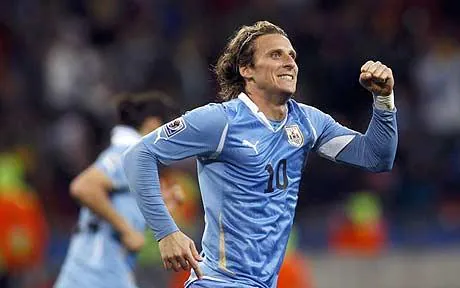
Diego Forlan had defenders and goalkeepers shaking. The relationship between Forlan and that unpredictable Jabulani ball had us fans screaming SHOOT at the TV to shoot each time he picked up the ball 30 or so yards out from goal. In fact 3 of his 5 tournament goals came outside the box, with the one against Germany in the third-place play-off winning goal of the tournament.
His performances led Uruguay to their first WC semi-final since 1970 and left him as the joint golden boot winner alongside Wesley Sneijder, David Villa and Thomas Müller.
Full Time
For some, these iconic performances were a launchpad that propelled their career. For others, it was the peak, a personal and national triumph that can never be taken away from them. But regardless of how their careers turned out, they’ll be famously known for their impact in the world’s biggest sporting event.