
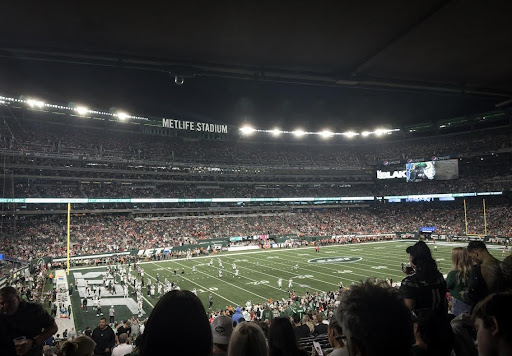
MetLife Stadium, home of both the Giants and the Jets – Source: Unsplash
Three Biggest Stories To Watch Throughout the 2026 NFL Offseason
Only a few weeks have passed since that rampant Seahawks defense suffocated the life out of Drake Maye and the New England Patriots at Super Bowl LX, but already, attention has turned to the future. 12 months ago, no one anticipated Seattle being in Lombardi contention at the end of the 2025 season, let alone winning the whole thing. Now, however, courtesy of that lopsided triumph in Santa Clara, no one is doubting them anymore, especially online betting sites.


The latest odds from the popular Lucky Rebel Sportsbook currently make the newly minted champions a +850 favorite to repeat their Lombardi exploits next term. But while Mike Macdonald plots another assault on the summit, some others are wondering how on earth they are to navigate the minefield that is the ongoing offseason. Mike LaFleur, for example, is sitting at his desk in Tempe as the new head coach of the Arizona Cardinals — 19 days into the job, and already staring at the most radioactive contract in professional football.
Kyler Murray’s deal sits there like an unexploded grenade: $52.7 million against the 2026 cap, a March 15 deadline that will guarantee another $19.5 million of Murray’s 2027 salary if Arizona doesn’t act, and a quarterback the organization has quietly decided it doesn’t want anymore. And he isn’t the only one. Here are the stories you need to be watching over the next few weeks and months.
The Great Quarterback Firesale
There’s a specific kind of front-office desperation that only emerges when a franchise hands out a max extension in full panic mode and the calendar starts collecting on that debt. Both Arizona and Miami know the feeling intimately right now.
Arizona’s situation is structural agony. Trade Kyler Murray before March 15 and they absorb $17.9 million in dead money but claw back $35.3 million in cap relief — painful, but survivable. Miss the deadline, and that $19.5 million in 2027 guaranteed money quietly fires, locking the franchise into paying a quarterback they’ve already moved on from. The Cardinals have reportedly made peace with the decision: they’re sticking with veteran Jacoby Brissett, shipping Murray out, and perhaps even looking at Ty Simpson should he still be available in the second round of the draft.
Miami’s situation is somehow even uglier. Releasing Tua Tagovailoa outright triggers an NFL-record $99.2 million dead cap hit — a figure so catastrophic it essentially makes a straight release impossible and a trade the only rational exit. Even in a trade, the Dolphins are absorbing $45.2 million in retained salary against their cap. They’ve already stripped the roster: Tyreek Hill’s gone, Bradley Chubb’s gone, the competitive window nailed shut from the inside.
The Vikings, Cardinals, Colts, and Falcons are among the teams CBS Sports has connected to a Tua trade, and ESPN’s Seth Walder floated the most creative scenario — Miami packages Tua with two second-round picks just to get someone to take the contract off their hands, a structure that calls back to the infamous Brock Osweiler Houston-to-Cleveland desperation trade of 2017. One team. $99.2 million in dead cap. Zero good options.
The Future of George Pickens
George Pickens is getting the franchise tag. That much has been confirmed by Dallas Cowboys CEO Stephen Jones at the combine — “We know George will be here,” he told reporters with the calm confidence of a man about to spend $28 million on a player who spent last year demanding out of Pittsburgh. Pickens delivered in Dallas: 90 receptions, 1,409 yards, 9 touchdowns — career highs across the board, a season that justified every draft pick the Cowboys surrendered to get him. The tag is the right call for 2026.
It doesn’t solve anything beyond that. Dallas already pays CeeDee Lamb $34 million per year — the two of them together represent roughly $62 million in receiver salary, a combination that makes the Cowboys either a legitimate NFC title contender or a monument to misallocated cap space, depending on how the rest of the roster ages. The tag is a band-aid. The Cowboys need a long-term deal, and that negotiation is going to be everything you expect from an organization that treats contract talks as a form of performance art.
Here’s the thing: Pickens is represented by David Mulugheta of Athletes First — the same agent Jerry Jones infamously claimed not to recognize by name during the Micah Parsons extension saga that blew up spectacularly last offseason and ended with defensive superstar headed to Green Bay. That relationship is frostbite-level cold.
Mulugheta has a documented, explicit philosophy against franchise tags for his clients. Jones, for his part, told the Cowboys’ website that he’s “looking forward to getting things worked out so George can be a Cowboy a long time.” Translation: nothing’s close.
Expect this to linger through OTAs, leak into training camp, and give the Dallas media approximately 200 opportunities to ask about it before anything gets resolved. Does Jerry Jones actually blink first, or does he let the best receiver he’s had since Dez Bryant walk into a July holdout? We’ve watched this organization do this before. We know how it tends to end.
Fernando Mendoza Day
Raiders GM John Spytek stood at the combine podium on Tuesday and never said the name Fernando Mendoza once. He didn’t need to. He described wanting “a leader, tough as hell, somebody that loves to play football, a maniacal preparer” — and the entire room understood exactly who he was describing.
Las Vegas holds the first overall pick in April’s 2026 draft, and it doesn’t take Nostradamus to figure out who they’re going to select. Co-owner Tom Brady and the aforementioned Spytek flew to Miami together to watch Mendoza guide Indiana to a perfect 16-0 national championship-winning season, with the superstar QB picking up the Heisman along the way. The first overall pick has been decided for months.
Mendoza’s credentials are legitimate: 41 touchdowns, 6 interceptions, 72% completion rate, seven rushing scores, and the most improbable run in college football history from a program that had never won anything before he walked into the building. He skipped throwing at the combine — opting instead to showcase at Indiana’s Pro Day on April 1, throwing to his own receivers in his own system — a calculated move that tells you everything about how the 22-year-old understands his own leverage. Spytek has attended multiple Indiana games and watched Mendoza perform under every kind of pressure. This isn’t a decision being made at the combine. It’s a confirmation being ceremonially acknowledged.
The genuine drama starts at pick two and doesn’t stop until the first round ends. Beyond Mendoza, this class has very few exciting QBs but is loaded with talent elsewhere. Notre Dame RB Jeremiyah Love projects as a top-10 pick, an almost unheard-of position for a running back on modern consensus boards; Ohio State’s Carnell Tate brings the contested-catch profile teams pay for; Arvell Reese is bending edges and forcing scouts to reconsider their EDGE boards; Texas Tech’s David Bailey led the nation in sacks and pressures. April 23 in Pittsburgh is going to be loud.