

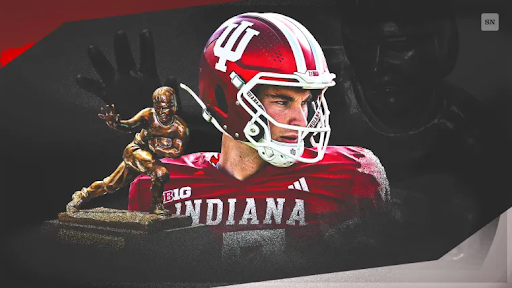
The Las Vegas Raiders are approaching one of the most consequential moments in franchise history after officially clinching the No. 1 overall pick in the 2026 NFL Draft. Coming off a disastrous 3-14 season that resulted in the firing of head coach Pete Carroll, the organization now faces a decision that will define its competitive direction for years. This article examines how the Raiders landed the top pick for the first time since 2007, why Indiana quarterback and Heisman Trophy winner Fernando Mendoza has emerged as the favorite, how Tom Brady’s influence is reshaping evaluation standards, and why analytical benchmarking tools—including fantasy-based simulations—are increasingly relevant to real NFL decision-making.
The Raiders Are on the Clock — A Franchise-Defining Moment
The Raiders’ path to the No. 1 overall pick was unconventional and dramatic. Finishing the season at 3-14 placed Las Vegas at the bottom of the league standings, but it was a strength-of-schedule tiebreaker that ultimately elevated them above other teams with identical records. That tiebreaker was sealed in Week 18, when the Raiders unexpectedly defeated the Kansas City Chiefs, a win that paradoxically secured them the top draft slot rather than pushing them further down the board. This marks the first time since 2007 that the franchise controls the No. 1 selection, underscoring the magnitude of the moment. The firing of Pete Carroll following the 3-14 campaign confirmed that ownership views this pick as the foundation of a full organizational reset. Fans, executives, and league observers alike recognize that this decision will ripple through coaching hires, roster construction, and competitive timelines well beyond the 2026 season.
The Fernando Mendoza Phenomenon
Indiana quarterback Fernando Mendoza has become the central figure in the Raiders’ draft calculus. The reigning Heisman Trophy winner, Mendoza arrives in the NFL Draft with a profile that blends elite production and advanced mental processing. His 70.8% completion rate stands out not merely as a statistical achievement but as evidence of consistent accuracy, disciplined decision-making, and command of offensive structure. Evaluators repeatedly describe Mendoza as “pro-ready,” pointing to his ability to read defenses pre-snap, adjust protections, and progress through reads without panic. During Indiana’s undefeated regular season, Mendoza consistently delivered in high-leverage moments, showing poise late in games and precision in the red zone. As April approaches, league consensus increasingly views Mendoza as the likely first name called, making him the most realistic candidate to become the next face of the Raiders franchise.
The Indiana Connection and the Brady Standard
Mendoza’s appeal to the Raiders extends beyond his collegiate résumé. Minority owner Tom Brady has quietly influenced the organization’s quarterback evaluation philosophy, emphasizing cerebral traits, obsessive preparation habits, and what he has long described as a “love of the game.” General manager John Spytek has aligned closely with that standard, prioritizing quarterbacks who win mentally before the snap rather than relying solely on improvisational talent. Mendoza’s leadership of Indiana to an undefeated regular season showcased exactly those traits, reinforcing his reputation as a quarterback who elevates structure rather than freelancing outside it. In an era where flashy tools often dominate draft discourse, the Raiders appear increasingly committed to a Brady-inspired model that values discipline, processing speed, and emotional investment as non-negotiable qualities.
Benchmarking Rookie Value Through Simulation
Modern NFL decision-making now blends traditional scouting with analytical modeling, and the Raiders are no exception. Front offices routinely use simulations and predictive frameworks to estimate rookie impact relative to veteran alternatives. For fans and executives alike, participating in a fantasy football draft mirrors that same evaluation logic, offering a data-driven environment to quantify immediate “starting value.” These simulations help contextualize whether a rookie quarterback like Fernando Mendoza provides more immediate and long-term value than veteran stopgaps such as Geno Smith. Cost-controlled rookie contracts, projected win shares, and opportunity cost are all variables that increasingly shape draft-night decisions. What once existed purely in the realm of fan engagement now closely resembles the internal models NFL teams use to justify high-stakes selections.
The Texas Factor — Arch Manning Enters the Equation
While Mendoza headlines the quarterback class, Texas quarterback Arch Manning introduces a compelling alternative. Manning’s blue-chip pedigree and developmental upside ensure his presence in every No. 1 pick conversation. Unlike Mendoza, whose profile emphasizes immediate readiness, Manning represents a longer developmental arc with immense theoretical ceiling. This contrast forces the Raiders to confront their own tolerance for risk and patience. Manning’s name recognition would instantly electrify the fan base and generate national attention, but it also raises questions about timeline alignment with a roster that has multiple glaring needs. The decision between Mendoza and Manning ultimately reflects whether Las Vegas prioritizes certainty and fit or is willing to gamble on long-term upside and brand resonance.
Trade Down or Take the Franchise QB
Holding the No. 1 overall pick naturally invites trade inquiries, and the Raiders must weigh the allure of a massive asset haul against the scarcity of elite quarterback prospects. Trading down could yield multiple premium selections, accelerating a broader rebuild by addressing deficiencies across the offensive line, defense, and skill positions. However, passing on a Heisman Trophy winner with a 70.8% completion rate carries enormous risk, particularly in a league where franchise quarterbacks remain the most valuable commodity. The opportunity cost of bypassing Mendoza—or Manning—for future assets will define how history judges this front office. For John Spytek and the ownership group, this decision is not merely tactical; it is existential.
Organizational Identity After a 3-14 Collapse
The Raiders’ 3-14 season exposed systemic flaws that extended beyond quarterback play, but it also clarified priorities. Ownership has signaled a willingness to endure short-term growing pains if it results in long-term stability. Selecting a quarterback at No. 1 would immediately anchor the franchise’s identity and influence coaching philosophy, offensive design, and free-agent strategy. Conversely, a trade-down approach would emphasize patience and breadth over immediacy. Either path demands organizational alignment, clear communication with fans, and a unified vision that acknowledges the lessons of past missteps.
Why the 2026 Draft Will Define the Raiders’ Decade
The 2026 NFL Draft represents more than a single roster addition for the Raiders. It is a referendum on how the organization evaluates talent, balances analytics with intuition, and commits to a long-term vision. Fernando Mendoza has emerged as a symbol of modern quarterback evaluation—precise, cerebral, and production-driven—while alternatives like Arch Manning test the franchise’s appetite for projection and patience. When Las Vegas goes on the clock in April, the choice will resonate far beyond draft night, shaping the Raiders’ trajectory for the next ten years and answering a question that has lingered since 2007: who will finally be the quarterback to define this franchise’s future?