


Most golfers don’t lose strokes because of their swing. They lose them because they guessed the yardage wrong. The best golf rangefinders solve that problem directly, but picking the right one is trickier than it sounds. Bright sunlight washes out displays, trees behind a flag confuse target acquisition, and slope mode gets you disqualified in tournament play. After reviewing the top options on the market, this guide breaks down five rangefinders that actually deliver on their promises.
The research approach for this ranking


Publicly available information shaped every decision here. User reviews, feature breakdowns, and ratings pulled from review platforms and official brand sites were the main sources. Only rangefinders with a documented track record in the golf equipment space made the cut.
→ See the full research breakdown
- Precision Pro Golf – Best for accuracy and value at rapid speed
Bushnell Golf – Best for laser rangefinder accuracy and PGA Tour trust - GolfDiscount – Best for the largest brand selection and best pricing
- Nikon – Best for premium optical clarity and slope accuracy
- VoiceCaddie – Best for accurate golf rangefinders and watches without fees
Why Picking the Right Golf Rangefinder Should Matter
Picking the wrong rangefinder doesn’t just cost money. It costs you strokes, confidence, and clean decision-making on the course.
Reading distances accurately in bright sunlight is harder than most golfers expect. Washed-out displays and poor contrast make it easy to misread a number by five or ten yards. That margin, over a full round, adds up fast.
Target acquisition is its own challenge. When a flag sits in front of a tree line, a weak rangefinder locks onto the background instead of the pin. That kind of false reading leads to the wrong club, every time.
The right rangefinder, one with confirmed flag-lock feedback and yardage accuracy within plus or minus one yard, removes the guesswork entirely. Fast target lock acquisition time means you’re reading distances in seconds, not fumbling with a device mid-round. That’s where real course management starts.
Top 5 Golf Rangefinders Breakdown and Comparison
Note: All data in this table is sourced from review platforms and the official websites of the listed companies.
|
Company Name |
Years Operating |
Team Size |
Price Range |
Headquartered In |
|
Precision Pro Golf |
Since 2013 |
11-50 employees |
$279.99-$399.99 |
Cincinnati, Ohio, USA |
|
Bushnell Golf |
Since 1948 |
201-500 employees |
From $299.99 |
Overland Park, USA |
|
GolfDiscount |
Since 1995 |
51-200 employees |
Varies by product |
Bellevue, Washington, USA |
|
Nikon |
Since 1917 |
51-200 employees |
$199.95-$499.95 |
Melville, New York, USA |
|
VoiceCaddie |
Since 2010 |
11-50 employees |
$99-$599.99 |
Buena Park, California, USA |
Precision Pro Golf – Best for Accuracy and Value at Rapid Speed
What Does Precision Pro Golf Do?
Precision Pro Golf is a Cincinnati-based golf technology company founded in 2013 by a PGA professional. They design and sell laser rangefinders and GPS devices directly to consumers, cutting out the retail markup (which usually means noticeable savings). Their Titan Elite and NX series are built on IP67-rated aluminum construction, making them genuinely waterproof rather than just splash-resistant. The direct-to-consumer model also powers their customer support reputation, which buyers mention almost as often as the rangefinders themselves.
Why Does Precision Pro Golf Stand Out for Golf Rangefinders?
Precision Pro solves the classic dilemma of wanting premium performance without paying a premium price. Their rangefinders deliver fast vibration feedback and accurate flag acquisition in a package priced well below some competitors. That approach has earned them over 11,000 verified reviews averaging 4.72 out of 5, which tells you this isn’t just a budget brand cutting corners.
Summary of Real User Reviews:
Users point to two things most often: how fast the device locks onto the target and how clearly the optics read in variable lighting. The magnetic cart mount gets specific praise as a practical feature that most people didn’t know they wanted until they used it. A few users mention minor GPS app connectivity quirks, but those show up as outliers against a very positive overall picture.
Bushnell Golf – Best for Laser Rangefinder Accuracy and PGA Tour Trust
What Does Bushnell Golf Do?
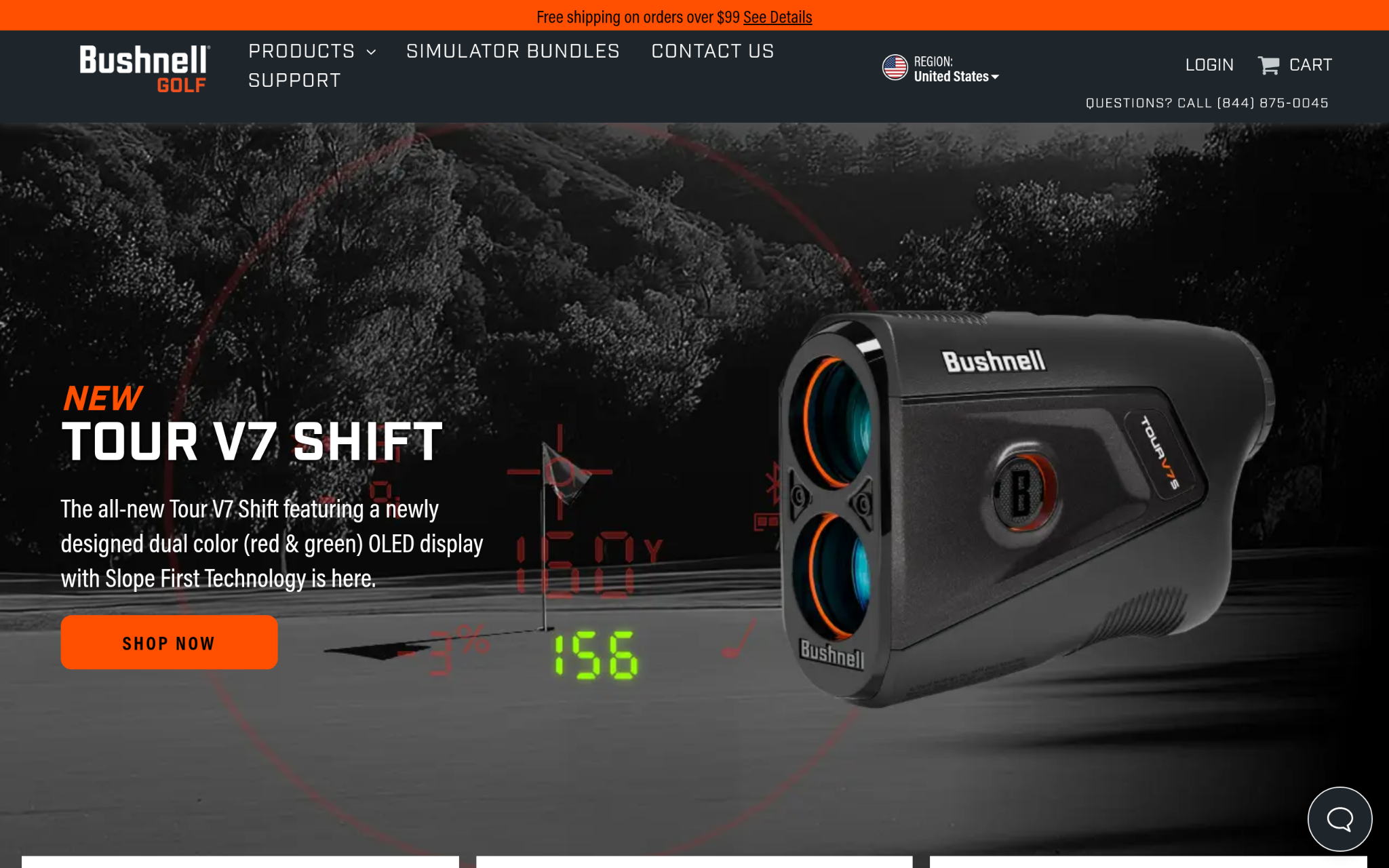
Bushnell Golf builds laser rangefinders, GPS devices, and personal launch monitors for golfers who need dependable distance data on every shot. They’ve been at it since 1948, and that experience shows in how their devices perform under pressure. Golfers who want to browse the full lineup can find the rangefinder models at Bushnell Golf sorted by feature set and price point. PinSeeker technology paired with JOLT vibration feedback confirms flag acquisition, so there’s no second-guessing whether you’ve locked onto the pin or a background tree.
Why Does Bushnell Golf Stand Out for Golf Rangefinders?
Bushnell addresses one of the most frustrating on-course problems: knowing with certainty that your rangefinder is reading the flag and not the woods behind it. That confidence, backed by data showing 98-99% of PGA Tour players use their devices, is the kind of real-world validation that’s genuinely hard to match. And honestly, tour-level adoption isn’t a marketing talking point you can fake.
Summary of Real User Reviews:
Golfers consistently come back to one word: reliable. The Pro X3+ ranked first in independent testing against other premium models, and users note it reads the flag fast even with a cluttered background. Some durability concerns around older models and customer service responses do come up, but the measurement performance stays consistently praised across thousands of reviews.
GolfDiscount – Best for Largest Brand Selection and Best Pricing
What Does GolfDiscount Do?
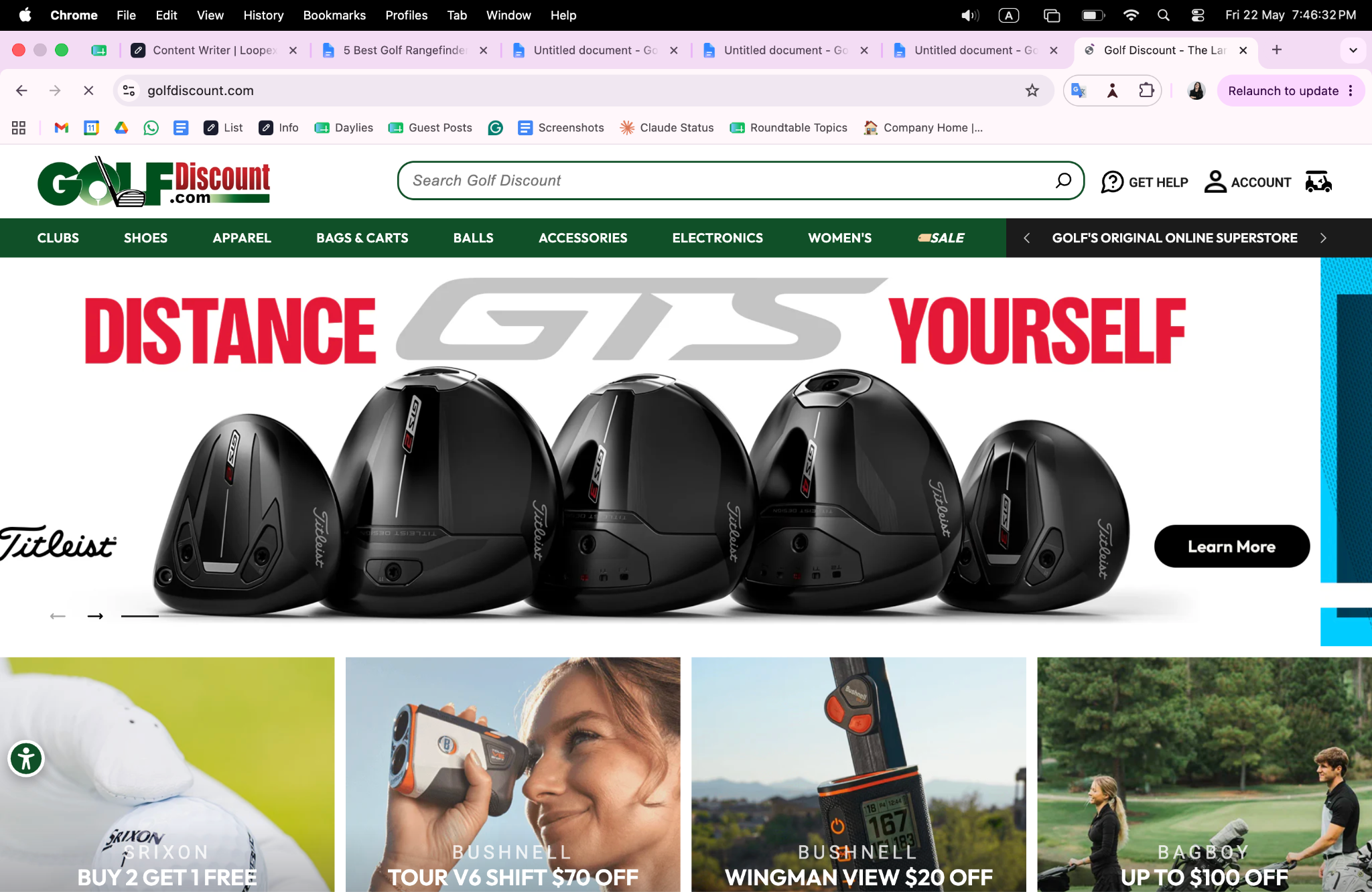
GolfDiscount.com launched in 1995 as one of the first online golf retail destinations, and it’s stayed relevant by stocking authorized products from virtually every major brand, including Ping, Titleist, TaylorMade, Callaway, and Cobra. It’s less a rangefinder brand and more a destination for golfers who want to compare models across manufacturers in one place. They offer a 100-day satisfaction guarantee and price-matching services, which help when you’re deciding between two models at similar price points.
Why Does GolfDiscount Stand Out for Golf Rangefinders?
GolfDiscount fills a specific gap: golfers who want to compare rangefinders from multiple brands side by side without bouncing between a dozen manufacturer websites. That selection depth, paired with competitive pricing on authorized products, makes it a practical starting point for purchase decisions.
Summary of Real User Reviews:
The review picture here is genuinely mixed (not exactly a ringing endorsement). Trustpilot and Sitejabber ratings sit well below what most buyers hope to see, with shipping delays and communication gaps being the most common complaints. Reviews hosted on the company’s own site tell a much more positive story, so basing expectations on third-party sources is the smarter move.
Nikon – Best for Premium Optical Clarity and Slope Accuracy
What Does Nikon Do?
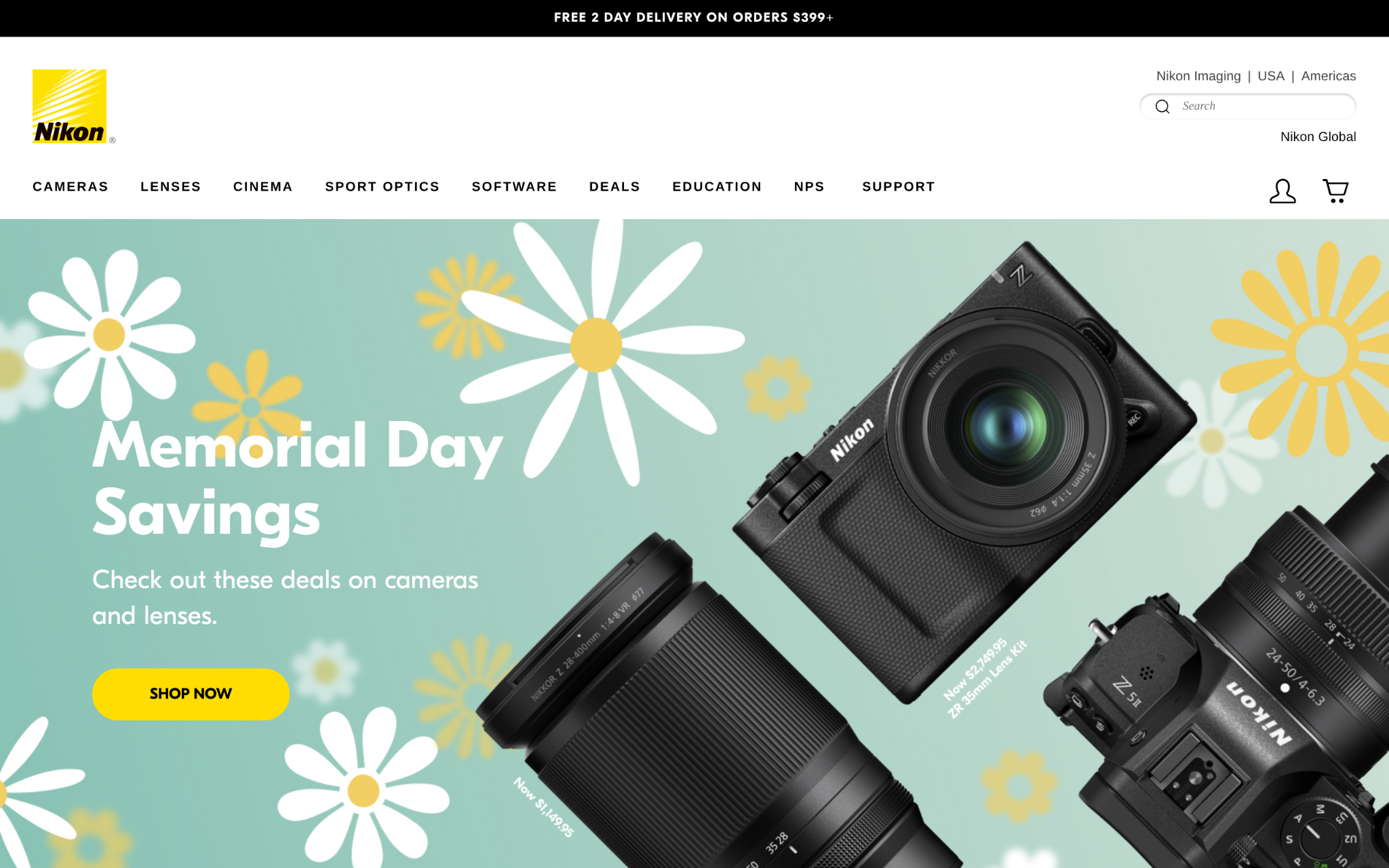
Nikon brings more than a century of precision optics engineering to the golf course through its COOLSHOT rangefinder series. The optical quality difference is real: 6x magnification with multi-layer coatings produces views that are noticeably brighter and cleaner than many competitors in the same price range. Their HYPER READ technology calculates distances in as little as 0.1 seconds, and the LOCKED ON QUAKE system gives both a visual and tactile signal when the flag is confirmed. The range ceiling hits 1,200 yards, which matters more for scenic courses than tight parkland tracks.
Why Does Nikon Stand Out for Golf Rangefinders?
Nikon solves the optical clarity problem that cheaper rangefinders ignore entirely. Clear, bright magnification directly affects how confidently a golfer can aim and lock onto a distant flag. Nikon’s heritage in glass manufacturing gives it a genuine edge there, and it shows the moment you look through the eyepiece.
Summary of Real User Reviews:
Reviewers consistently lead with the optics before anything else. Words like “crystal clear” and “bright even in shade” show up across independent reviews, and the 5-year warranty beats most competitors by a wide margin. A handful of users note the eyepiece runs small for golfers who wear glasses, and a few mention concerns about extreme temperature performance, but overall satisfaction ratings hold strong.
VoiceCaddie – Best for Accurate Golf Rangefinders and Watches Without Fees

What Does VoiceCaddie Do?
VoiceCaddie launched in 2010 with a specific ambition: bring professional-grade course data to everyday golfers without locking them into subscription fees. They pioneered voice-output GPS rangefinders and have since expanded into laser rangefinders, GPS watches, and launch monitors. Their V-Algorithm technology pulls from over a decade of PGA and LPGA professional data to calculate slope-adjusted distances. The course database covers more than 40,000 courses, and none of it costs extra annually (which adds up to real money saved over a few seasons).
Why Does VoiceCaddie Stand Out for Golf Rangefinders?
VoiceCaddie removes the hidden ongoing cost that most golfers don’t factor into the initial purchase decision. No subscription fees, combined with a target lock-on speed under 0.1 seconds and professional-validated yardage algorithms, make their devices genuinely strong performers relative to their price. So for golfers who hate surprise costs, it’s a pretty compelling setup.
Summary of Real User Reviews:
The TL1 laser rangefinder earns praise for fast, accurate readings with well-tuned vibration feedback. GPS watch users highlight the T11 Pro for staying within two yards consistently across different course types. The main friction points are occasional slope inconsistencies on GPS watches and Android app compatibility on launch monitors, both of which appear infrequently against an otherwise solid track record.
Research Methodology and Selection Process
Putting this list together required more than skimming a few product pages. A structured process was followed across multiple stages to make sure every rangefinder included here had real evidence behind its placement.
Initial Data Collection
The starting point was building a broad longlist from multiple sources simultaneously. Golf equipment directories, consumer review platforms, manufacturer websites, and editorial review sites were all pulled together to get a picture of which rangefinders consistently appeared in recommendation contexts. Products that showed up repeatedly across independent sources got flagged for closer review. This stage was deliberately wide, avoiding premature filtering so that no legitimate contender got missed early.
Shortlisting Phase
From the longlist, a stricter filtering process began. Options with thin or unverifiable review histories were removed first. Review patterns were examined carefully: consistent volume of detailed feedback carried more weight than a handful of glowing short reviews. Products where review sentiment spiked suspiciously or lacked detail about actual on-course use were deprioritized. Rangefinders remaining after this stage had demonstrated measurable satisfaction across multiple independent audiences.
Verification of Claims
Each shortlisted product was then checked against its real-world reputation. Claims made on official product pages, such as accuracy ratings, target acquisition speeds, and waterproofing standards, were cross-referenced with independent reviewer findings and user reports. Where marketing claims and actual performance diverged noticeably, that gap was noted and factored into placement. Only products where claimed performance held up across external verification made the final list.
Authority and Industry Contribution Layer
Beyond pure performance data, authority signals were examined for each brand. Recognition in golf equipment publications, mentions in professional contexts, awards from industry sources, and tour-level usage data all contributed to this layer. Brands with a documented presence in professional golf or meaningful contributions to rangefinder technology development were weighted more favorably at this stage. That kind of sustained industry presence reflects consistency that single product reviews can’t fully capture.
Golf Rangefinders-Specific Evidence
The final layer focused on golf relevance. Generic optics companies that happened to sell a golf rangefinder were treated differently from brands with dedicated golf product lines, golf-specific feature development, and verified reviews from actual golfers describing on-course scenarios. Service pages, course-condition-specific testing data, and tournament-legal feature documentation were all reviewed here. Only brands with a clear, sustained focus on the golf rangefinder category made it through this final stage.
How to Choose the Right Golf Rangefinders
Start by matching the device to how you actually play. A weekend golfer has different priorities than someone competing in club tournaments, and the right rangefinder reflects that.
- Industry and Domain Experience: Look for brands with proven track records in golf. Optics heritage matters, but golf-specific feature development matters more for on-course use.
- Features and Service Options: Flag-lock confirmation, slope compensation, and display readability in sunlight are the features that affect real rounds. Prioritize those over specs that sound impressive but rarely come into play.
- Pricing Structure: Factor in total cost, not just the sticker price. Devices with subscription-based GPS features add up over time, while one-time purchases can be more cost-effective across multiple seasons.
- Results Measurement: Yardage accuracy within plus or minus one yard and target lock acquisition time in seconds are the metrics that tell you whether a device performs where it counts.
- Industry Knowledge and USGA Equipment Rules and Tournament Legal Standards: Slope mode is a useful training tool, but it’s restricted in competitive tournament play under USGA and R&A rules. Make sure the device you choose can toggle slope off cleanly for competition rounds.
Bottom Line
Choosing among the best golf rangefinders comes down to what matters most in your specific game. Bushnell Golf leads in accuracy and tour-validated reliability. Precision Pro delivers strong performance at a lower price point. Nikon wins on optical clarity. VoiceCaddie removes subscription costs from the equation. GolfDiscount works best as a buying destination rather than a brand. As rangefinder technology keeps advancing, faster target acquisition and cleaner displays will only raise the floor for what golfers should expect.