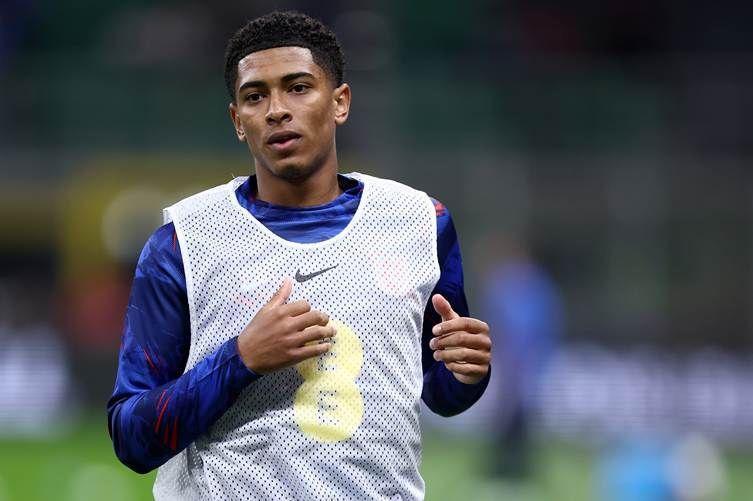


The off-season is often misunderstood in football. Once the final whistle blows, many athletes shift into rest mode without recognising that summer represents one of the most important development windows of the year. Performance on game day is built long before kick-off — and often far from the spotlight.
Structured off-season training provides a framework for growth that casual workouts rarely deliver. Families and players looking to explore organised summer football camps can use curated directories to identify structured programmes designed specifically for skill progression, conditioning, and exposure. Rather than improvising drills alone, athletes benefit from systems built around measurable improvement.


Why Does Off-Season Training Matter in Football?
Football exposes joints, connective tissue, and muscle groups to a series of repetitive stressors. The off-season creates an opportunity for recovery and adaptation through progressive overload. As a comprehensive component of an athlete’s long-term training regimen, recovery phases mitigate overuse injuries that occur over the course of a season.
Lapses in conditioning arise in the absence of an established plan. Speed dissipates, mobility deteriorates, and reaction time remains flat. Athletes should aim to address limitations in their physical capacity prior to the aggressive demands of a preseason training schedule. Off-season training offers the opportunity to thwart future injury risks before organized competition ramps up.
How Do Summer Football Camps Strengthen Skill
Development?
Skill is built over time through practice and reinforcement under guidance. Many types of summer football camps will provide position specific drill work. These drills may help provide quarterbacks, receivers, linemen and defensive backs with opportunities to work through a more specific skill development set. It also allows them to learn proper technique and skills in a safe and coached environment
Coaches can then work with their athletes to learn through guided repetition. Work can be done by improving foot and hand placement, showing athletes how to time their movements properly and think about how to react quickly and analyze situations. Athletes can see how to think with a coaches perspective to help them understand how their play on the field impacts the game. Building more than one perspective is great for the athlete and may help them see more and learn more from those around them.
Scrimmages and other types of work will only enhance these skills. Coaching situations and even natural competition that comes from a scrimmage can push athletes to really get after it, cheered on by teammates to improve on skill sets under pressure of evaluation but may be stress free if handled properly.
Can Summer Football Camps Improve Recruiting Exposure?
For high school athletes, summer can also influence recruitment visibility. Many camps incorporate showcase formats, where players perform drills in front of coaches and evaluators. Understanding recruitment standards — such as those outlined by the NCAA — helps athletes benchmark performance expectations.
Networking opportunities emerge organically in these settings. Coaches observe technique, work ethic, and coachability firsthand. While a camp does not guarantee recruitment, it can provide measurable performance feedback and increased awareness among decision-makers.
What Role Does Conditioning Play in Athlete Transformation?
Conditioning is often the x-factor separating good from great. Off-season training typically includes work on speed mechanics, acceleration, and lateral movement. Training in the weight room prioritizes power production, core strength, and lower body force application.
That training is only half the equation. Recovery is the science of applying load, hydration, and rest to enable an athlete to continue training without overtraining. Through smart training, adaptations are sustainable, rather than short-term improvements.
Are Summer Football Camps Right for Every Athlete?
Training load should be individualized. Decisions to participate in training camp should be made based on age, biological development, and previous training history. Younger athletes may benefit from training camps with skill work. Older athletes, looking to play college football, may choose training camps with the goal of exposure and premiere level training.
Recovery is just as important as working out. Be sure to allow for both structured work and unstructured play. You’re in this for the long haul. Don’t allow for burnout for short-term gains. Athletes who use the summer wisely, with intention, both outwork and outrecover their peers during training camp. Be sure that your training reflects your goals and your purpose, with a comprehensive view towards preparation, rather than the training camp as a stand-alone event.
The off-season is the ultimate competitive advantage. Those who treat the summer with strategic intent, outperform their peers who train by default. You can gain a leg up on the competition this season. Choose wisely when selecting summer football camps, align training to your goals, and use the summer to get ahead.