

Spend enough time around college football people and you start to notice a pattern in how programs talk about their most important hires. For most of the last decade, the conversation always circled back to the same side of the ball. Who’s your offensive coordinator? Who’s calling plays? Who’s going to move the ball against the best defenses in the country and keep recruits excited enough to sign? The offensive coordinator became the premium asset, the hire that signaled ambition, the name that drove the news cycle when a program was trying to make a statement.
Lincoln Riley. Chip Kelly. The spread architects and air raid disciples. Every program with national aspirations was hunting for the next system that could light up scoreboards and sell recruits on touching the ball. Defense was an afterthought at best, a necessary inconvenience at worst. You needed it, but you didn’t build your identity around it.


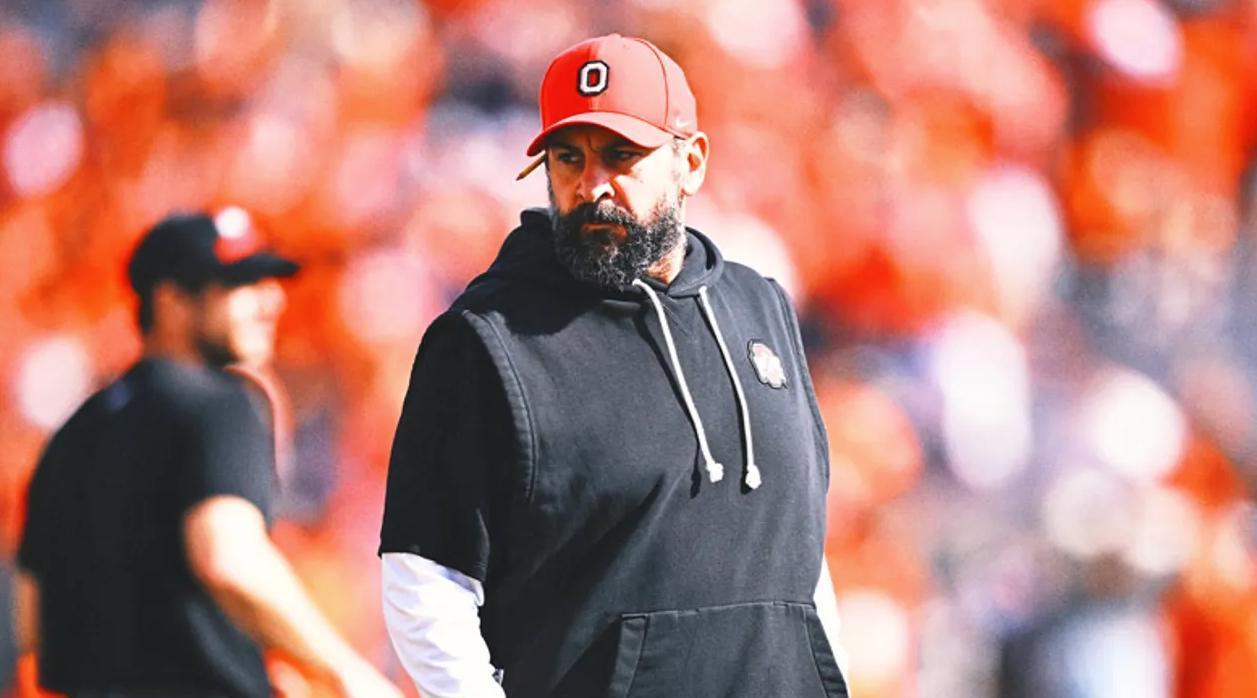
That era is closing. And Matt Patricia is one of the clearest signals of what’s replacing it.
The Numbers Have Been Moving for Years
The shift didn’t happen overnight. College football scoring has been declining steadily since peaking in 2016, when FBS teams averaged 30.04 points per game, the highest mark in the modern era. According to data tracked by Saturday Down South, passes per game have fallen in each of the last four seasons, with 2025 registering the lowest per-game average since 2006. The defenses caught up, and in some cases surpassed the offenses.
Ohio State’s defense under Patricia in 2025 is the most visible proof point in that trend. The Buckeyes finished No. 1 nationally in total defense, passing defense, and scoring defense, allowing just 9.3 points per game across a full season that included a Big Ten championship game appearance and a College Football Playoff run.
The last program to allow fewer points and fewer yards per game in a single season was the 2011 Alabama Crimson Tide under Nick Saban, a defense widely considered one of the greatest in college football history. Patricia matched that standard in his first year in Columbus, with eight new starters, against a schedule that didn’t offer any soft spots.
The Playoff Changed the Math
The expanded College Football Playoff didn’t just give more teams a chance at a title. It changed what winning in January actually requires. Under the old four-team format, a dominant regular season and a favorable bracket could carry a team deep.
Under eight teams and four rounds, you have to beat elite competition repeatedly, against opponents with weeks to prepare specifically for your offense. The teams that hold up over that kind of extended run are the ones with defenses that can adapt week to week, not just units that are athletically superior to everyone they face.
Patricia’s defense, built on opponent-specific preparation and scheme adjustments that change from game to game, is precisely the kind of unit that holds up under that pressure. His Patriots defenses were renowned for looking different every week, presenting coverages and fronts specifically designed to attack what an opponent did well rather than running the same calls regardless of matchup.
That quality was valuable in the NFL. In a college playoff structure that demands four consecutive performances against elite offenses, it may be the most important attribute a coordinator can have.
Ryan Day recognized this before most. Bringing Patricia in from the NFL after Knowles departed was a deliberate philosophical statement about what championship football looks like when the schedule extends into late January. “You love being around smart guys,” Day said of Patricia when the hire was announced. “And he’s smart.”
A New Kind of Coordinator Arms Race
The coordinator market is rebalancing in real time. Programs that spent the last decade outbidding each other for offensive minds are now watching the most consequential coaching acquisition of the 2025 cycle produce a defense that sent four players into the top 36 picks of the 2026 NFL Draft. Arvell Reese fifth overall. Sonny Styles seventh. Caleb Downs eleventh. Kayden McDonald thirty-sixth. Three of those four were not projected first-round picks entering the 2025 season. The draft results represented coaching evidence, not program prestige, and they’re being watched by every program trying to figure out what the next competitive advantage looks like.
Patricia signed a contract extension through January 2029 rather than return to the NFL, where interest reportedly surfaced after his historic first season. The decision to stay in Columbus says something about what Patricia sees in the college game right now, and something about what Ohio State has built around him. The offensive coordinator gold rush produced some genuinely great football. But the teams still standing in January are increasingly the ones that can stop somebody. Matt Patricia is building the model for what that looks like, and the rest of college football is starting to pay attention.