
Artificial Intelligence has transformed from science fiction into an essential tool that’s reshaping how footballers train, improve, and reach peak performance. From amateur youth academies to elite Premier League clubs, AI technology is providing insights and training methods that were unimaginable just a decade ago. This revolution isn’t replacing coaches—it’s empowering them with data-driven insights that help players maximize their potential while minimizing injury risks.
Performance Analysis and Data Tracking
One of the most impactful applications of AI in football training is real-time performance analysis. Modern players wear GPS trackers and smart vests during training sessions that collect thousands of data points every second. AI algorithms process this massive amount of information instantly, providing coaches with detailed insights about each player’s movements, speed, distance covered, acceleration patterns, and energy expenditure.


What makes AI special is its ability to spot patterns humans might miss. For example, the system can detect that a midfielder consistently slows down in the final 15 minutes of training, suggesting a stamina issue that needs addressing. Or it might notice that a defender’s sprint speed drops after making three consecutive tackles, indicating potential fatigue that could lead to injury.
Top clubs like Manchester City and Liverpool use AI-powered systems that create detailed heat maps showing exactly where each player moves during sessions. This helps coaches understand positioning habits and identify areas for improvement. If a winger consistently drifts too central, the AI flags this pattern, allowing coaches to work on maintaining width in the team’s shape.
The technology also compares individual performance against team averages and even against elite players in similar positions worldwide. A young striker can see how his sprint speed, shot accuracy, and positioning compare to Harry Kane or Erling Haaland, providing clear benchmarks for improvement.
Personalized Training Programs
Every footballer is unique, with different strengths, weaknesses, body types, and learning styles. AI makes it possible to create truly personalized training programs tailored to each player’s specific needs. Traditional training often uses a one-size-fits-all approach, but AI analyzes individual data to design custom workouts that address each player’s particular requirements.
For instance, if AI analysis shows that a player has excellent pace but poor decision-making in the final third, the system generates specific drills focusing on quick thinking under pressure. These might include small-sided games with limited touches or scenarios requiring rapid choices between shooting and passing.
Recovery is equally personalized. AI monitors training load, match intensity, sleep quality, and even nutrition to recommend optimal recovery strategies. If data shows a player is at risk of overtraining, the system automatically adjusts their workload, perhaps suggesting a lighter session or complete rest day. This individualized approach helps prevent burnout and keeps players fresh throughout long seasons.
Young players particularly benefit from AI-driven personalization. Academy coaches can track development over months and years, identifying exactly which skills need work. The AI might notice that a 16-year-old midfielder has great passing accuracy but struggles with defensive positioning. The system then creates targeted drills to improve tactical awareness while maintaining their existing strengths. You can place bets on your favorite sport here: https://betbangladesh.net/
Injury Prevention and Management
Injuries are every footballer’s nightmare, costing clubs millions in wages for unavailable players and potentially ending careers prematurely. AI has become a game-changer in predicting and preventing injuries before they happen. By analyzing training loads, movement patterns, muscle fatigue indicators, and historical injury data, AI systems can identify risk factors and warn medical staff when a player enters the danger zone.
Advanced AI platforms monitor biomechanics in incredible detail. Cameras and sensors track how players run, jump, and change direction. If the system detects abnormal movement patterns—perhaps a slight limp or altered running gait—it alerts the medical team immediately. Often these changes are so subtle that human observers miss them, but they can indicate developing problems.
The technology also considers external factors. Weather conditions, pitch quality, upcoming fixture congestion, and even travel schedules are factored into injury risk assessments. Before a intense period with three matches in seven days, the AI might recommend modified training intensity for certain players based on their individual fatigue levels and injury history.
Premier League clubs report that AI-driven injury prevention programs have reduced soft tissue injuries by 20-30%. This translates to more available players, better team performance, and significant financial savings. For players, it means longer careers and more time doing what they love—playing football.
Tactical Analysis and Opposition Scouting
Understanding opponents has always been crucial in football, but AI has elevated tactical analysis to extraordinary levels. Modern systems can analyze thousands of hours of match footage, identifying patterns in how teams play, their tactical weaknesses, and individual player tendencies.
AI can break down an opponent’s entire season in hours, something that would take human analysts weeks. The technology identifies their most common formations, passing patterns, pressing triggers, and set-piece routines. It spots which players are key to their system and how the team responds when those players are neutralized.
For individual players, AI creates detailed profiles. Coaches receive reports showing that an opposing right-back always cuts inside on his left foot, or that their striker consistently makes runs behind the defense when the ball goes wide. Armed with this knowledge, teams can prepare specific strategies to exploit these tendencies.
The same technology helps teams analyze their own matches. After each game, AI generates comprehensive reports highlighting what worked and what didn’t. Coaches can quickly review key moments, successful patterns, and areas needing improvement without spending hours rewatching footage manually.
Technical Skill Development
AI is transforming how players develop technical skills through smart training equipment and virtual reality systems. Interactive walls with sensors measure passing accuracy and power, providing instant feedback. Players can practice thousands of passes, with AI tracking every attempt and showing exactly where improvement is needed.
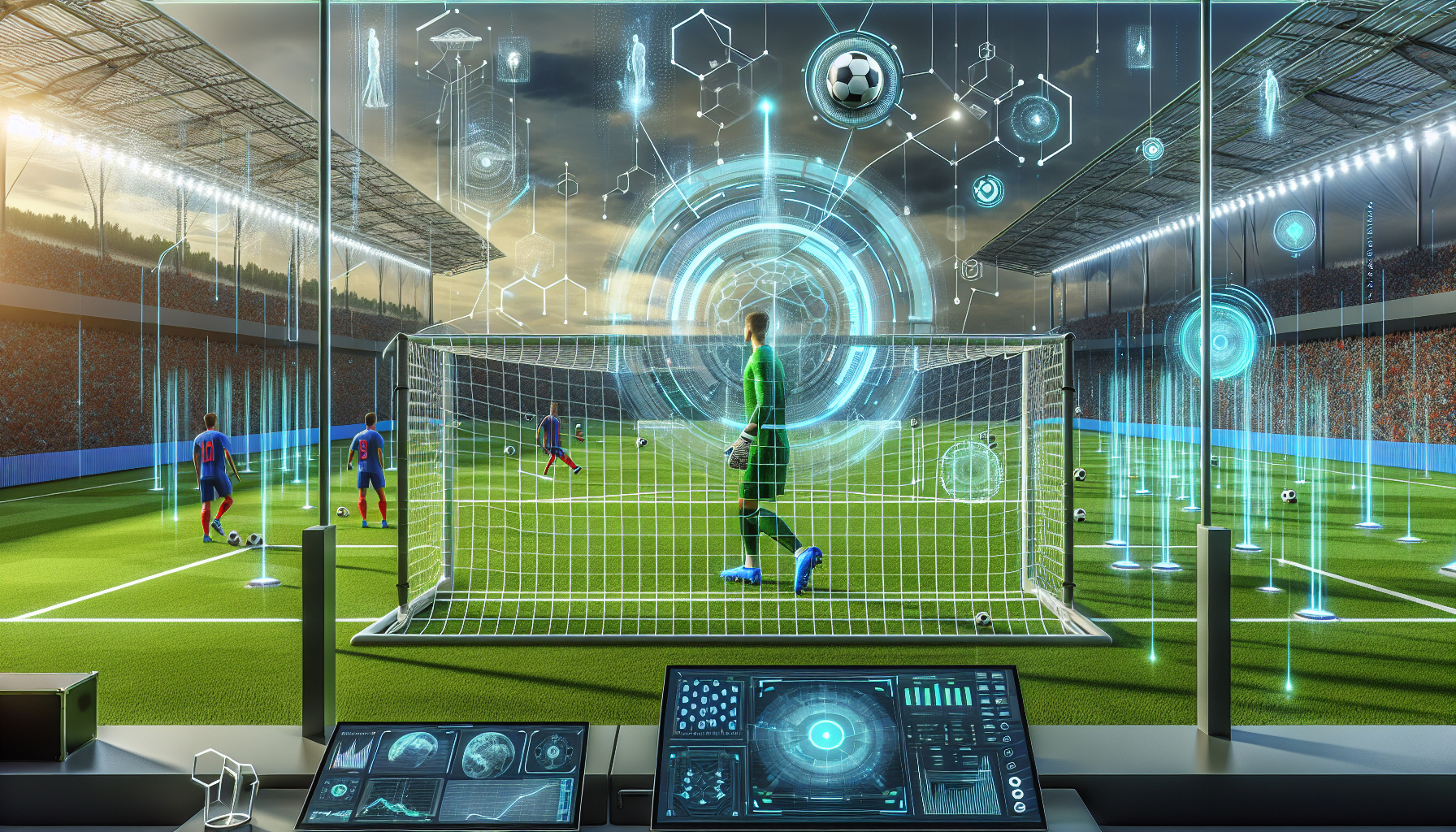
Shooting practice has been revolutionized by AI-powered goal systems. Sensors detect shot speed, placement, technique, and spin. The AI then suggests adjustments—perhaps striking the ball with a different part of the foot or adjusting body position. Players see immediate results from these corrections, accelerating skill development.
Virtual reality training is becoming increasingly sophisticated. Players wear VR headsets that simulate match scenarios, allowing them to practice decision-making without physical fatigue. A midfielder might face 100 different passing situations in 20 minutes, learning to recognize patterns and make quick choices. The AI adjusts difficulty based on performance, ensuring players are constantly challenged at the right level.
Some clubs use AI-powered robots that simulate opponents during training. These machines can replicate the movements and playing styles of upcoming opponents, allowing defenders to practice against a striker who moves exactly like Cristiano Ronaldo or attackers to face a defensive setup mirroring Liverpool’s press.
Mental and Psychological Training
Football isn’t just physical—mental strength often separates good players from great ones. AI is now being used to enhance psychological preparation and mental resilience. Systems analyze player behavior patterns, stress indicators, and performance under pressure to identify mental strengths and weaknesses.
Wearable technology monitors heart rate variability, which indicates stress levels. If a player’s data shows elevated stress before important matches, sports psychologists can work with them on specific anxiety management techniques. The AI tracks whether these interventions work, allowing continuous refinement of mental training approaches.
Some clubs use AI-powered apps that present players with decision-making scenarios, measuring reaction speed and choice quality under time pressure. These cognitive training tools help players think faster during matches when split-second decisions determine success or failure.
The Future of AI in Football Training
The AI revolution in football training is just beginning. Emerging technologies promise even more transformative changes. Predictive AI will soon forecast player development trajectories, helping clubs identify which young players will reach elite levels. Imagine knowing with 80% accuracy which 14-year-old academy player will become a star by age 21.
Advanced biomechanical analysis will optimize movement efficiency, teaching players the most energy-efficient ways to sprint, jump, and change direction. This could extend careers and reduce fatigue-related injuries.
AI coaching assistants might soon provide real-time advice during matches, analyzing the game as it unfolds and suggesting tactical adjustments. While human coaches will always make final decisions, AI can process information faster than any person, identifying opportunities and threats instantly.
Conclusion
Artificial Intelligence is revolutionizing football training in ways that benefit everyone—from grassroots players to international superstars. By providing detailed performance insights, creating personalized training programs, preventing injuries, enhancing tactical understanding, and developing technical skills, AI helps players reach their maximum potential faster and safer than ever before.
The technology doesn’t replace the human elements that make football beautiful—the passion, creativity, and unpredictability. Instead, it enhances these qualities by ensuring players are physically prepared, tactically informed, and mentally ready to express their talent fully.
As AI continues evolving, the gap between good and great players may narrow, not because talent matters less, but because everyone has access to world-class training insights. The future of football training is here, and it’s powered by artificial intelligence working alongside dedicated coaches and determined players to push the beautiful game to new heights.