

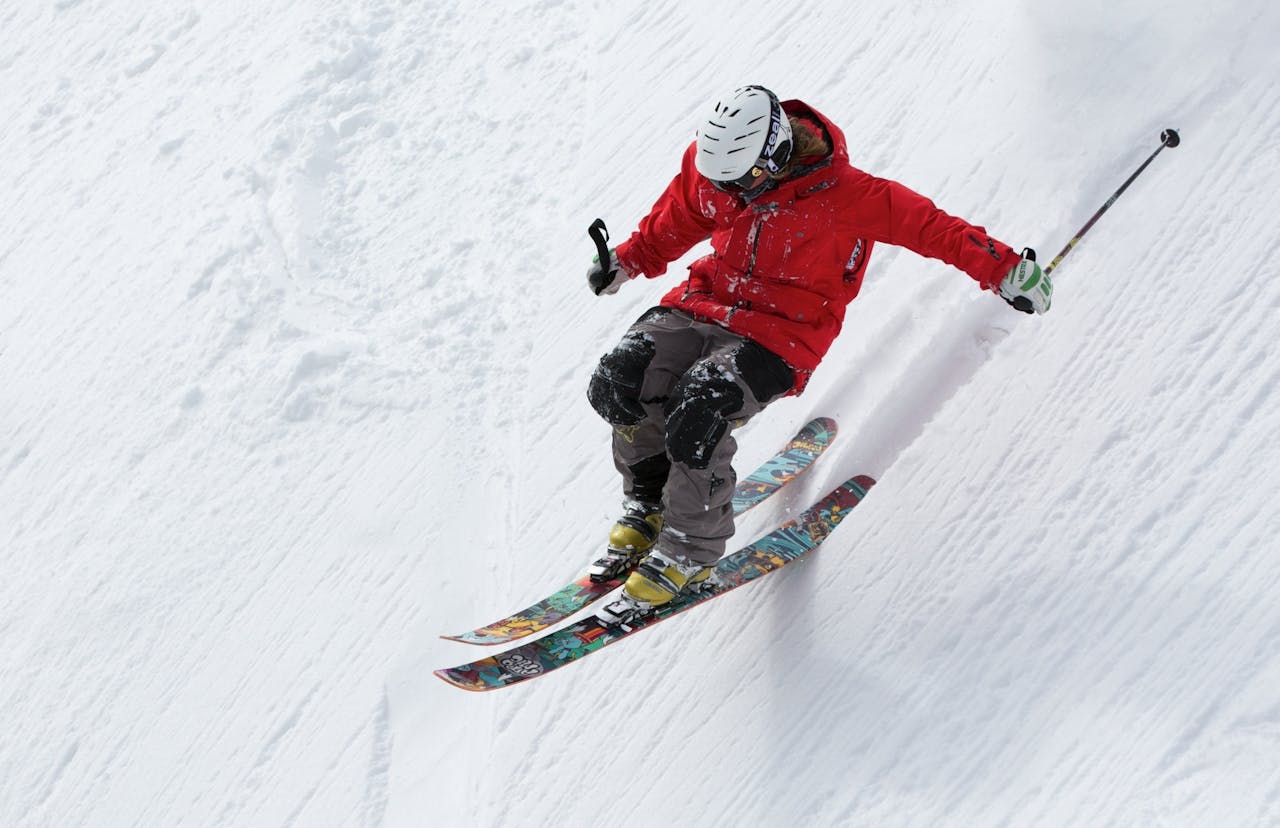
What Is Telemark
It is a style of downhill skiing that differs from classic alpine skiing. It is considered a separate discipline and requires special equipment.
When turning, the skier spreads their legs: one foot moves forward, the other remains behind. The skis form a single edge, allowing the athlete to make an arc. In terms of movement mechanics, this turn can be compared to snowboarding on the front edge.


The style originated in the 1860s in the Norwegian province of Telemark. Its pioneer was a farmer named Sondre Norheim. He developed a special skiing technique — a turn that looks like a step forward — and created a new type of binding.
Before that, for thousands of years, skis were fastened with a simple strap into which the foot was inserted. Norheim made a loop around the heel from birch twigs, which he had previously soaked in hot water for flexibility. This solution gave the skier a completely different level of control.
A new wave of interest in this technique came in the 1970s and 1980s in Colorado, when skiers in search of new sensations and freedom of movement returned to their roots.
Always new offers for players and thrill seekers – social casino at Free Spin
Where in the world is telemark skiing developed
The telemark skiing community is small but friendly — in essence, it is a separate subculture. On the first Saturday in March, Telemark Day is celebrated around the world: riders gather at their local resorts and share what is happening on social media under a common hashtag.
Most telemarkers are found in America and a number of European countries: Norway, Finland, Slovenia, Germany, Italy, France and Switzerland. Large festivals are held in Livigno, Italy, and Schilthorn, Switzerland.
Telemark And Alpine Skiing — The Main Differences
The practical advantage of telemark skiing is its versatility for backcountry skiing. Unlike classic alpine skiing, a free heel is a basic principle here: it is not initially attached to the ski. It was telemark skiing that gave rise to the development of ski touring skis.
Telemark skiing also differs in terms of the sensations it provides. It is valued for its more natural interaction with the terrain, greater fluidity, and a special feeling of gliding and turning. Telemark skiers catch this feeling by constantly calibrating their balance: slightly forward, slightly backward or downward — the work is done in all planes.
Who Should Try Telemark Skiing
This sport may be of interest to those who already ski or snowboard and want to try something new. Among telemark skiers, there are many people who, due to their work, spend the entire season on the mountain: ski school instructors, avalanche service employees, mountain guides.
With an experienced instructor, you can start lessons from scratch. But telemark skiing requires good physical fitness and excellent body control. Mastering connected turns takes longer here than in alpine skiing.
How Telemark Skiing Is Beneficial
This technique develops coordination and balance, engaging both hemispheres of the brain — both legs are actively involved in the process. The physical exertion here is significant: unlike alpine skiing, there is less opportunity to rely on bone structure, and the leg muscles work more actively — this is a better workout than the gym.
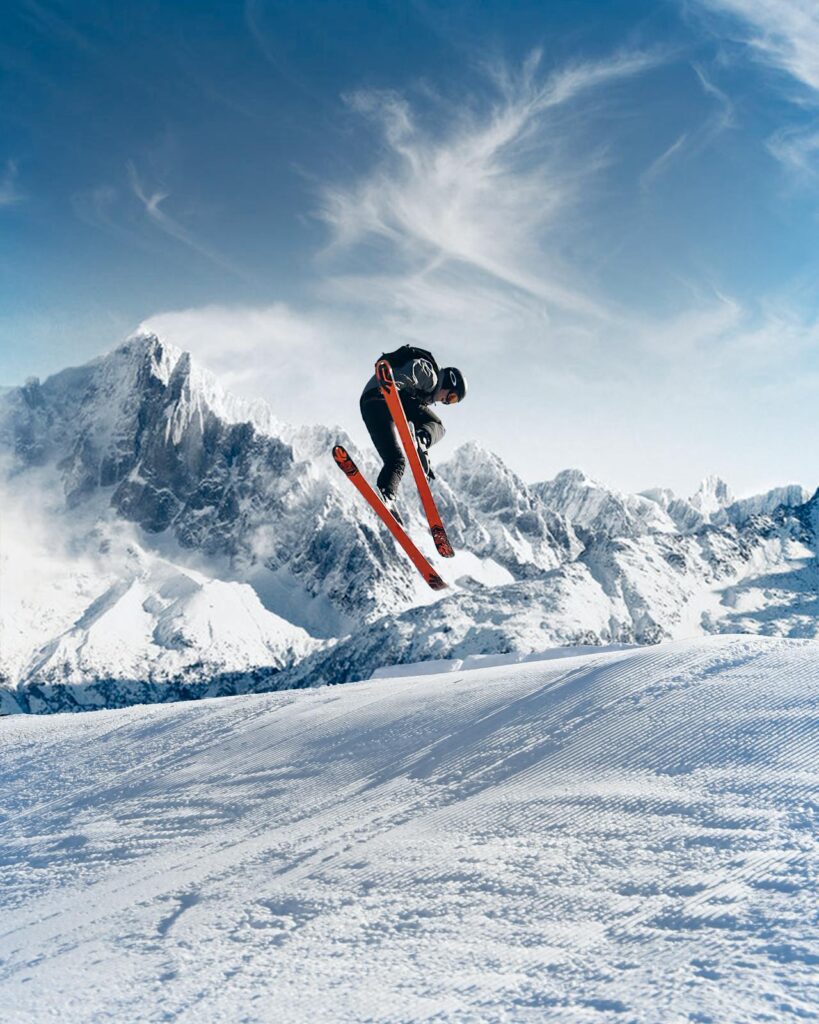
Telemark Equipment
Telemark skiing is not a cheap hobby, even if you already have ski equipment. You will need to purchase different bindings and boots and put them on a separate pair of skis.
Skis
You can choose almost any skis depending on your preferences: piste, freeride, or all-mountain. Just don’t choose skis that are too long. Softer models are preferable for learning.
Poles
Telemarkers stand lower than alpine skiers, so shorter poles are chosen for downhill skiing. A practical option is telescopic poles: they are suitable for both hiking and skiing. Some telemarkers prefer to ski with a traditional pole called a lurg. Athletes in the Telemark World Cup use cross-country skiing poles.