
Reformer and mat Pilates develop the body in different ways, which is why many people quickly notice differences in training results. When it comes to faster body transformation, stronger muscle activation and more visible posture improvement, Reformer Pilates usually has the advantage. The springs and moving carriage increase activation of the deep stabilising muscles and allow for more precise movement control. As a result, the body learns to move in a more efficient and balanced way much faster.
This does not mean that traditional mat Pilates is less effective. Mat work develops movement control, stability and body awareness without equipment support. The reformer simply translates these qualities into visible physical changes more quickly. That is why many people notice a flatter stomach, improved shoulder alignment and a longer-looking body after only a few weeks. The biggest difference, however, is not just about muscles. It is about how the body manages tension, posture and movement patterns.


Why does Pilates change the body differently than traditional workouts?
Body shape is not determined only by calorie burn. The way the body looks depends on tension distribution, pelvic alignment, diaphragm function, muscle length and the ability to maintain stability without excessive muscular gripping. Pilates works directly on these mechanisms. This is why people who practise regularly often appear leaner and more balanced even without major weight loss.
Muscles begin working together more efficiently. The glutes activate earlier, the core stabilises movement without constant abdominal bracing and the shoulders stop compensating during breathing. The way people walk and sit also changes. This is why well-guided Pilates affects not only body measurements, but overall body proportions and posture. Improved posture can visually transform the body faster than fat loss alone.
Why does Reformer Pilates reshape the body faster?
The reformer provides more control over resistance and range of motion than mat training. The springs maintain muscular engagement throughout the entire exercise, including the return phase of the movement. This allows the muscles to work longer and more evenly without constant changes in tension.
The moving carriage also plays an important role. When the body stabilises itself on an unstable surface, the deep core muscles activate more quickly. This especially affects the transverse abdominis, pelvic floor and scapular stabilisers. During traditional strength training, many people compensate with neck or lower back tension. The reformer exposes these compensations very quickly.
How does the reformer activate the deep muscles and core?
During mat Pilates, many exercises rely on controlling body weight without external support. This is effective, but often technically more difficult for beginners than it appears. The body then searches for easier movement patterns and shifts tension into the neck, hips or lower back. The reformer helps reduce these compensations.
The springs function as intelligent resistance. They can either support movement or increase its difficulty. This allows instructors to adapt the training precisely to the individual. A beginner can maintain proper movement mechanics without overloading the joints, while a more advanced client can increase intensity without losing movement quality. This is one of the reasons why modern Pilates studios so often use a professional Pilates reformer as the main tool for body conditioning and movement training.
The biggest differences between the reformer and mat Pilates can be seen in the way the body activates
- the reformer activates the core and shoulder stabilisers more quickly,
- mat Pilates develops independent movement control without equipment support,
- springs improve movement fluidity and continuous muscular engagement,
- the moving carriage increases awareness of pelvic and spinal alignment,
- mat exercises require greater technical precision from beginners,
- the reformer is easier to adapt for people with limited mobility or back pain.
Why does mat Pilates create different results than the reformer?
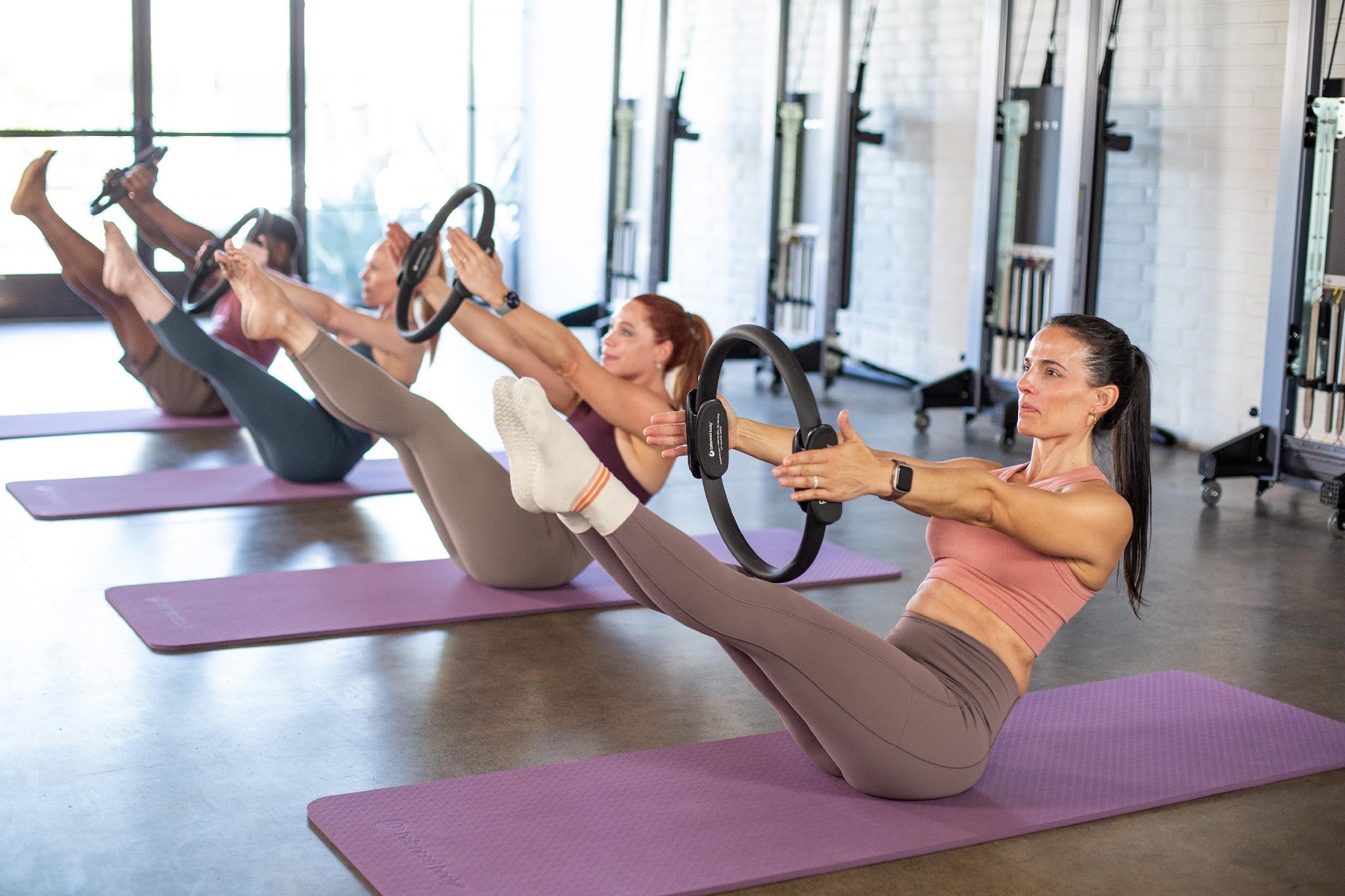
Traditional mat Pilates develops qualities that many people do not initially notice. It teaches the body to control movement without external resistance. This is often more demanding than machine-based training. The person exercising must independently maintain rib positioning, core activation and pelvic stability. When performed correctly, the body develops extremely strong movement foundations.
Visible physical changes usually appear more slowly than with the reformer, but they are often highly sustainable. The body stops reacting to daily stress with excessive muscular tension. The physique begins to look more natural because the improvement is not based only on muscle development, but on more efficient movement organisation. Mat Pilates develops movement quality. The reformer translates it into visible results faster.
Which workout creates a flatter stomach and waistline faster?
When it comes to the abdominal area, the reformer usually creates faster visual changes. Not because it “burns” more fat locally, but because it activates the deep stabilising muscles more effectively. The transverse abdominis works like a natural corset supporting the torso. As a result, the waistline begins to appear slimmer even without major changes in body weight.
Excellent results can also be achieved on the mat, but this requires greater technical awareness. Beginners often compensate with the hip flexors or rectus abdominis. The reformer reduces many of these errors by guiding movement more precisely. This is why many people notice changes in waistline definition faster with equipment-based Pilates.
How does Reformer Pilates shape the legs and glutes?
The moving carriage allows the legs to work through multiple positions and ranges of motion. The glute muscles activate intensely without overloading the knees or spine. This is a major advantage compared to many popular fitness workouts that rely on large numbers of dynamic repetitions and heavy joint loading.
Exercises performed lying down or in supported positions allow the body to build strength with less compensatory tension. As a result, the legs and glutes work effectively without creating a heavy or bulky appearance. This is one of the reasons why Reformer Pilates is so popular among people who want longer-looking legs and a stronger core without a bodybuilding-style effect.
The biggest changes in the body after regular training on the reformer
- a flatter-looking stomach due to improved deep core stabilisation,
- lower and more open shoulders because of better scapular control,
- stronger glute activation during everyday movement,
- lighter-looking legs due to improved pelvic alignment and fascial function,
- improved chest mobility affecting breathing and posture,
- a more upright and balanced body alignment.
Mat or reformer – which gives better results?
Mat and reformer Pilates create different results and require different forms of physical engagement. Mat Pilates is highly effective for developing core control, body awareness and stability without equipment support. The challenge is that many people perform the exercises too quickly or inaccurately. In that case, the body reinforces incorrect movement patterns instead of correcting them.
The reformer makes movement quality easier to observe. The carriage reveals asymmetries, while the springs help maintain movement rhythm and control. As a result, visual changes often appear faster. This does not mean that traditional mat Pilates is less valuable. Well-guided mat work builds an extremely aware and controlled body. Combining both methods usually creates the best overall results.
Who benefits most from Reformer Pilates?
Beginners often adapt more quickly to reformer training because the equipment helps organise movement and maintain proper body alignment. This is especially beneficial for people with sedentary lifestyles, back tension or difficulty activating the core without overloading the neck.
The reformer is also highly effective when the goal is more visible body transformation in a shorter period of time. Progressive resistance allows the body to develop gradually without sudden overload. The training is demanding, but also highly precise. Well-guided movement changes the body more effectively than hundreds of random repetitions.
How does Pilates equipment influence training results?
Movement quality also depends on equipment quality. The stability of the carriage, the smoothness of the rails and the responsiveness of the springs all influence how the body experiences resistance. Professional Pilates equipment provides more precise movement feedback, directly affecting muscle activation and nervous system function.
This is why respected equipment brands are highly valued by Pilates instructors worldwide. A well-designed reformer does not disrupt movement or force the body into compensation patterns. It allows the body to move smoothly without excessive tension in the joints or neck. The body often feels this difference very quickly.
Combining reformer and mat Pilates accelerates results
The best physical results rarely come from limiting training to only one method. Mat Pilates develops movement control and body awareness. The reformer transfers these qualities more quickly into strength, stability and visible body changes. Together, they create a complete movement system that challenges the body multidimensionally.
The body needs both precision and controlled resistance. It needs stability as well as movement in space. It needs strength together with mobility. That is why people who train regularly in a good Pilates studio often notice not only changes in appearance, but also changes in the way they move. Posture no longer needs to be consciously “held” — the body begins maintaining it naturally on its own.
This article was created in collaboration with balanced-body.fi