

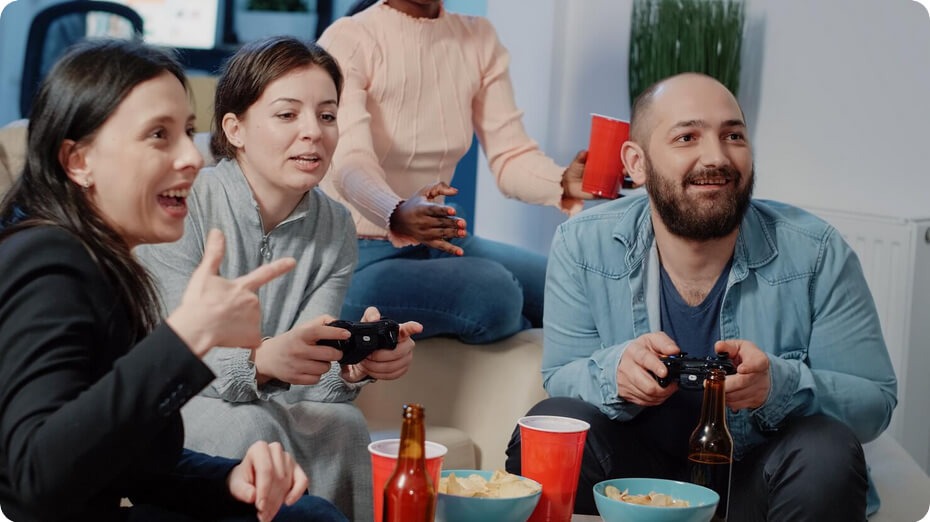
There’s a weird thing happening in gaming right now that doesn’t involve better graphics, cloud streaming, or billion‑dollar studios. People are going back to playing games together in the same room. Not online. Not voice chat. Not stream squads. Actual couch co‑op.


It sounds almost old‑fashioned when you say it out loud: friends, sofas, one TV, multiple controllers. But it’s real. And it’s growing. Local multiplayer – games you play side by side with real people – is having one of the strangest resurgences in years, even as the rest of the industry chases ever bigger, ever more connected experiences.
And when you look at why this shift is happening, it says something deeper about how we enjoy play, how we interact socially, and what people are craving from games that isn’t about screen resolution or live service calendars.
Not Just Nostalgia – Something Social Is Missing
If you ask most gamers why they loved old school games, they don’t talk about frame rates or textures. They talk about who they played with. They talk about bumping shoulders on the couch while trying to beat a boss. They talk about trash‑talking, collaboration, and the physical presence of another human player.
But there’s a different energy in local play. You hear laughter bounce off the walls. You hear groans when someone steals a power‑up. You hear real reactions, not emojis. That little human charge doesn’t transfer through a headset.
This is part of what’s driving local multiplayer’s return – not just nostalgia for the way things used to be, but a yearning for social presence. After years of screens, webcams, and boxed avatars, people want actual shared space.
Indie Games Leading the Charge
You don’t need a massive budget to make a local multiplayer hit. In fact, some of the most exciting and talked‑about releases in the past few years have been indie titles that embrace shared‑screen play. Games like Moving Out, Overcooked, Heave Ho, and Lovers in a Dangerous Spacetime got buzz not because they were technically dazzling, but because they made people laugh together.
It’s not accidental that these games feel social. They are designed around cooperation and chaos. Players have conflicting goals, limited space, and shared chaos. And playing with someone in the same room changes the dynamic. You don’t just coordinate moves. You read body language. You let your friend do something wild and pay for it. You feel it.
When developers talk about what makes multiplayer fun, they often mention dynamics that only really exist in proximity. Timing, eye contact, rhythm of turns – those matter. A well‑timed high five after clearing a level feels different when you can reach over and actually do it.
Bigger Studios Notice It Too
When indie games start trending, big studios pay attention. Publishers have started green‑lighting projects that emphasize local play, sometimes alongside online modes, because they recognize there’s an appetite for it.
This shift crept up alongside crowded online ecosystems and massive live-service games. Somewhere in the middle of all that, people realized that endless didn’t necessarily mean enjoyable. Local multiplayer offers a finite, shared, memorable experience.
Even some competitive gaming circles have embraced shared spaces again. In-person events where players gather, set up LANs, and compete side‑by‑side have grown. Retro gaming nights, indie showcases with co‑op demos, and pop‑up arcade bars have all contributed to this vibe.
The Psychology of Shared Play
There’s a reason board games and tabletop nights saw a huge resurgence in the same period local multiplayer started climbing again. Humans like shared experiences. Winning alone is fine. Winning with someone beside you feels better. Losing together feels like a story.
Studies of group dynamics show that proximity increases empathy, attention, and emotional reactions. That’s part of why a co‑op game night with friends can feel richer than a long session of online matches. You’re sharing space, reactions, and context – things no text chat can transmit fully.
Design That Encourages Interaction
Local multiplayer isn’t just a checkbox on menus. The best games that support it are designed around shared play. Levels are made so players are near each other often. Objectives require cooperation. Enemies and obstacles are placed to force communication.
There’s no substitute for facing a puzzle together on the same screen. You point with a finger. You nudge a friend’s elbow. You shout over engine sounds. It’s chaotic, spontaneous, and often hilarious – because humans err, improvise, and react in ways AI never will.
Designers who nail this understand that the screen isn’t just a window into a game world. It’s a shared stage for people. It has to accommodate multiple attention streams, physical gestures, and overlapping actions. That’s a different design challenge than making an online lobby look pretty.
Why This Matters Right Now
We live in a world of tiny screens and remote interactions. Zoom calls, voice chat, text threads – all that keeps us connected, but disembodied. Local multiplayer scratches a different itch. It’s physical. It’s immediate. It’s unpredictable.
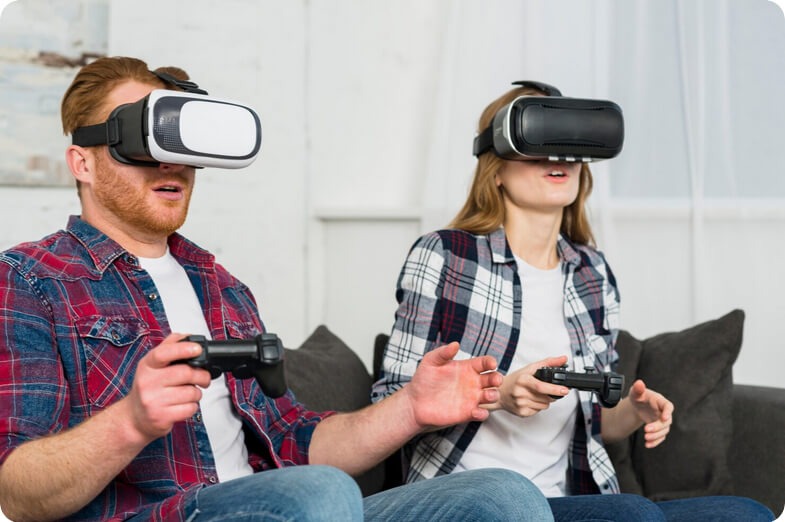
And as VR and cloud gaming dominate headlines, there’s something grounding about sitting on a couch with someone beside you, controllers hooked up, and a simple goal like “just get to the next level.” That simplicity is surprisingly refreshing.
Some of the most talked‑about moments in gaming aren’t cinematic trailers or viral esports plays. They’re roommates arguing over a missed jump, friends celebrating a near‑synchronous dodge, or siblings yelling at each other after a surprise defeat. Those are moments tied to presence, not avatars.
Shared Screens, Unshared Experiences
Here’s the funny part: two people can be playing the same game together on the same screen and still be having completely different experiences. One might focus on scoring, another on exploration, another on teasing the others when they mess up. That’s the beauty of shared play. It’s not uniform. It’s social. It’s unpredictable.
Online, you can communicate, but it’s never the same as someone in the room. You miss half the cues – eye rolls, half-smothered laughs.
The Future of Local Play in a Connected World
Local multiplayer isn’t going away with online games any more than live concerts disappeared after streaming started. They coexist because they offer different experiences. One isn’t a replacement for the other. They meet different emotional needs.
Developers know this. That’s why many titles offer hybrid modes: drop‑in local play, seamless online transitions, shared screens alongside online features. The best experiences combine proximity with connectivity.
Just as some designers borrow lessons on engagement from places like Anjouan Licensed Online Casinos, where structured feedback and risk/reward loops are key, local multiplayer draws on social psychology: presence, shared attention, and embodied interaction. It’s less about pixels on a screen and more about the space between players.
A Simple, Shared Joy
At the end of the day, local multiplayer’s resurgence isn’t a fad. It’s a reminder that games are social in origin. They began in arcades, living rooms, and dorm rooms – places where people gathered physically. The internet expanded that world exponentially, but it didn’t replace the joy of shared space.
People will still play solo or online. But sitting next to someone, controllers in hand, screens shared – that’s a play few technologies can replicate. And it’s why local multiplayer gaming feels like it’s coming back, stronger and more meaningful than ever.



